Oppo Reno8 Pro 5G and A77 5G bag NBTC certification
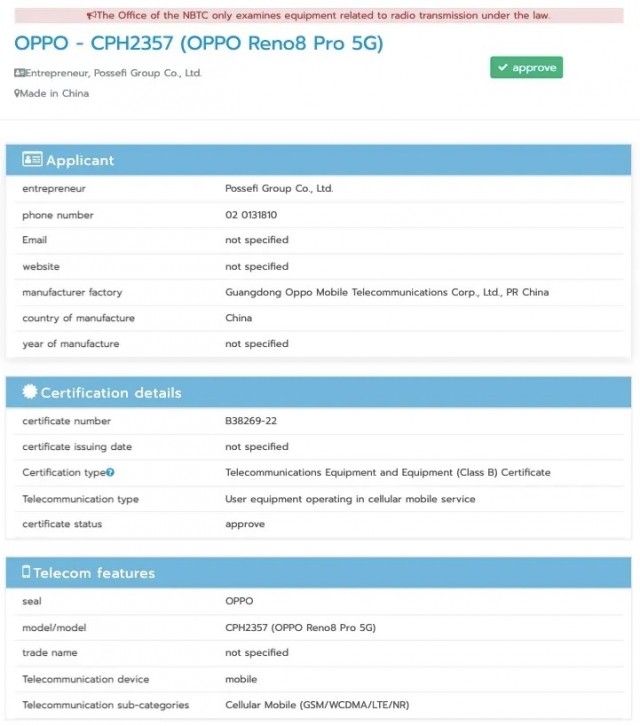
Oppo launched the A77 in May 2017 with 4G connectivity, and over half a decade later, the company is set to launch its 5G version, which just got NBTC certified.
The Thai certifying authority doesn’t divulge the Oppo A77 5G’s specs, but you can expect it to come with a modern design and improvements over the 4G model.
Oppo A77 5G NBTC certified
The Oppo Reno8 Pro 5G has also bagged NBTC certification, but the listing doesn’t include any of its specs. However, the smartphone has also been certified by EEC, and it has been spotted on the BIS website as well, suggesting an imminent launch.
Oppo Reno8 Pro 5G NBTC certified
More details about the Reno8 Pro 5G and A77 5G will hopefully surface in the coming weeks.
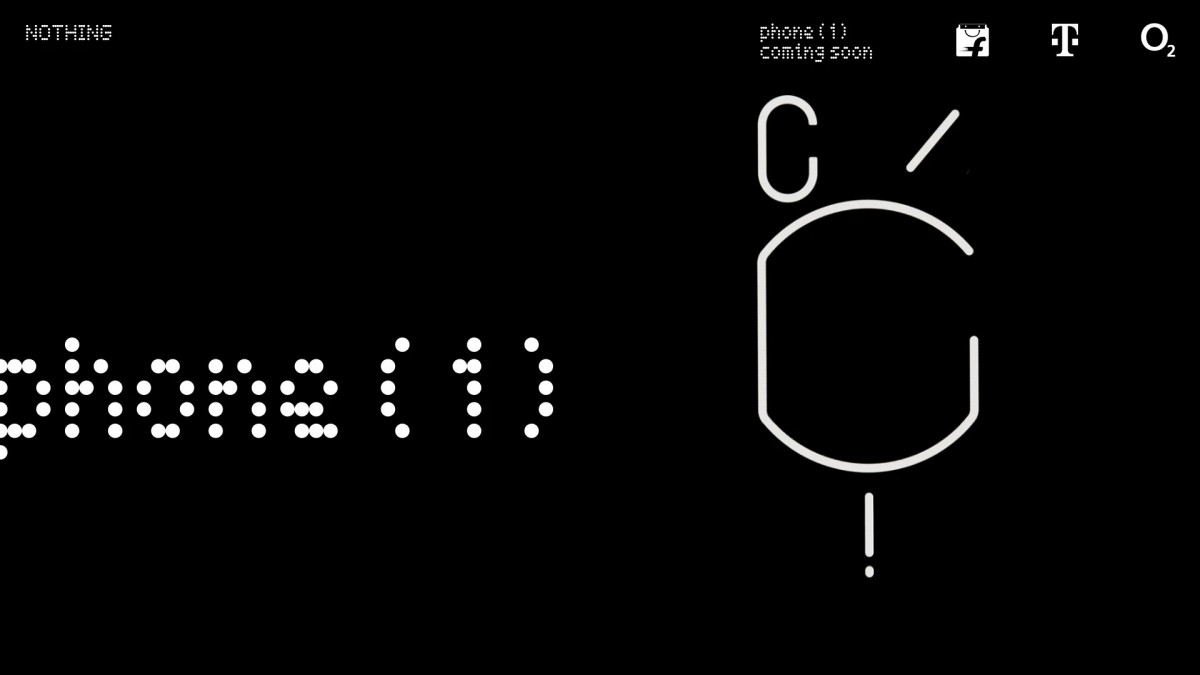
Nothing announces carrier and retail partnerships for the phone (1) throughout Europe and India
During his stint at OnePlus, the Chinese company pioneered the extended teaser campaign before the launch of any new smartphone, and now that he’s doing his own thing at Nothing, Carl Pei is definitely applying the same tactic.
Today Nothing has unveiled three sales partners for the upcoming Nothing phone (1), across Europe and India. Over in the UK, the exclusive carrier (sorry Brits, operator) partner for the device will be O2. Remember exclusivity deals? Nothing seems to want to bring those back! Not just the UK.
The situation is similar in Germany, where there’s another exclusive partner for the sale of the Nothing phone (1), only this time it’s Telekom. Thus you can expect to find the handset in O2 stores and in its online shop in the UK, and in Germany through Telekom’s online store and “selected stores”. It’s unclear whether non-carrier retailers will offer the phone in the UK and Germany, but that’s probably an announcement for a later date. As is anything that has to do with the phone’s specs, pricing, or release time frame.
Meanwhile in India, Flipkart will sell the Nothing phone (1), after Nothing extended its partnership with the retailer, which started last year. There was no mention of exclusivity here in Nothing’s press release, though, and that might be a notable omission.
Premiere Pro update adds GIF transparency and hardware encoding support
Following an update to Photoshop for iPad, Adobe also released a new version of its video editor Premiere Pro on Tuesday. In addition to new features such as GIF transparency and HDR proxies, the software now supports hardware encoding for faster exports.
As detailed by the company, the “May 2022 release (version 22.4)” of Adobe Premiere Pro comes with multiple improvements. Professionals can now export GIFs with transparency, which adds “greater flexibility for short social media content.” It has also become easier to distribute objects in titles and graphics thanks to new tools for adjusting spacing.
For Mac users, Adobe Premiere Pro now supports hardware encoding, either on Intel or M1 systems. Adobe says export times for 10-bit 4:2:0 HEVC videos can be up to 10 times faster with the update. Windows users will also see similar improvements on PCs with AMD GPUs.
In addition, the update makes the playback of QuickTime Screen Recordings smoother, as well as making the rendering process more reliable. There’s also support for HDR proxies, so that the app generates medium- and high-resolution media in the correct color space.
Premiere Pro 22.4 is focused on performance. Faster exports for 10-bit 4:2:2 HEVC is now available across all platforms, thanks to new hardware encoding support for macOS and AMD GPUs on Windows.
Smart rendering performance is improved and playback of QuickTime screen recordings is smoother. Feature enhancements in this release include support for transparencies in GIFs and options to distribute spacing between objects for titles and graphics.
The update is now available to Adobe Creative Cloud subscribers. More details about what’s new with the May 2022 release can be found on Adobe’s website.
Now obsolete, the iPod touch was once the gateway to the iOS ecosystem
Just a few days ago, I wrote an article asking why Apple is still selling the iPod touch in 2022. The company also announced Tuesday that both the iPod touch brand and its associated products have ended their life. What’s interesting to think about is that, now obsolete, the iPod touch was once the gateway to the iOS ecosystem.
An iPhone without the phone
The iPhone was a revolutionary device and many were interested in purchasing one. The original iPhone, Apple’s first smartphone, was available only in six countries. And for $499 with a two-year contract, not everyone was able to get their hands on the iPhone. Luckily, Apple came up with a solution.
The entire iPod lineup was still there for those who still preferred to have a dedicated device to play songs on. And in September 2007, Steve Jobs announced that Apple was bringing iPhone technology to the iPod with the first generation iPod touch.
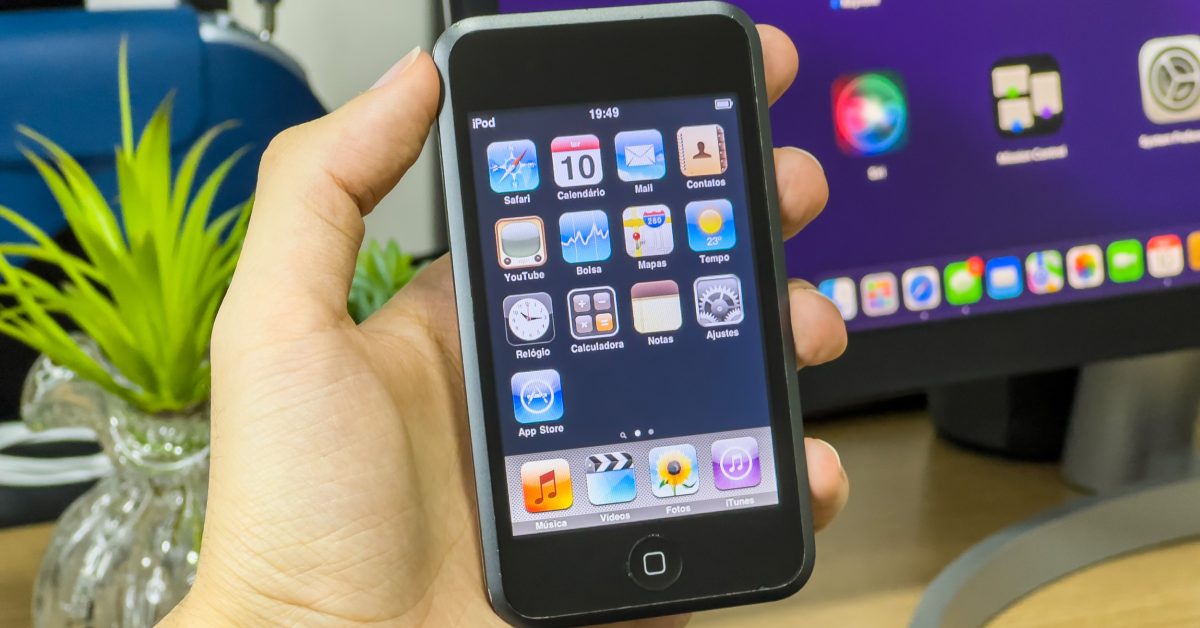
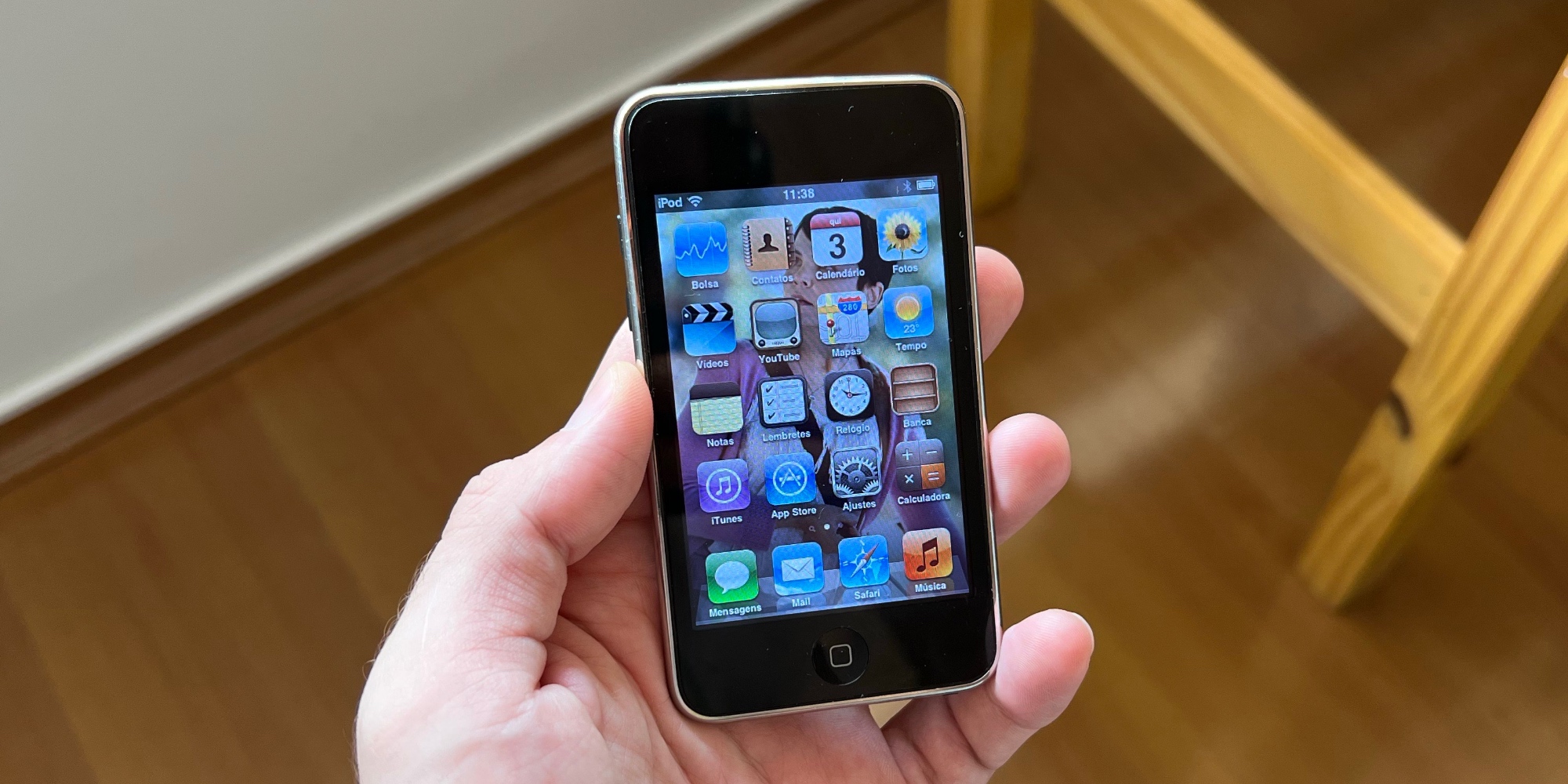
Unlike the other iPods, which all had Click Wheel and ran what Apple called “iPod Software,” the iPod touch was basically an iPhone without the phone. It had the same 3. 5-inch multi-touch display and the same iPhone OS, although with some limitations compared to the iPhone. The iPod touch was cheaper than the iPhone and launched in more countries that the iPhone.
It sounded perfect for creating a product that was a success. Brazil was the last country to release an iPhone. It also had carrier lock-in, so it wasn’t possible for Brazilians to buy one. However, thanks to the iPod touch, I and many other people were able to experience part of the iPhone.
A gateway to the iOS ecosystem
Don’t believe that Apple is limiting features to higher-end devices. The company was aware of what the iPod touch meant. Some features of the iPhone OS-based device were not available for iPhone users.
For instance, the first iPod touch only had the Safari, YouTube, Calendar, Contacts, Clock, Calculator, Music, Videos, Photos, and iTunes Store apps. The iPod touch didn’t have utility apps such as Stocks, Weather and Notes. This, of course, was a way to convince iPod users to buy an iPhone at some point – almost as if the iPod touch was a lite version of the iPhone.
Honestly, that worked out very well. To convince others that an iPod touch was necessary, the iPod touch featured key iPhone features. I remember zooming in on a photo with the “pinch” gesture, opening a webpage in Safari, or seeing the accelerometer in action for the first time on my iPod. That moment was the turning point for me.
A few months later, Apple released a software update that enabled the missing apps on the iPod touch, but it cost $19.99. And for years to follow, Apple charged for iPod touch software updates, while they were free for iPhone users.
A companion for the iPhone
Even after the iPhone became more popular, people still bought iPod touch as a companion device. It was also cheaper so you could load up an iPod with music, and leave your iPhone free of apps and photos. (Did you know there was an iPhone with only 4GB of storage? )
Months after Apple introduced the iPhone 3G in June 2008, the company announced the second-generation iPod touch. This time, besides a new design, it had more storage options, a built-in speaker, Bluetooth support, bigger battery, and most importantly, the iPhone OS 2.0 pre-installed with the brand new App Store.
Every year when Apple announced a new iPhone, a new iPod touch was announced a few months later with similar hardware and features. The third-generation iPod touch had the same faster CPU and GPU as the iPhone 3GS, while the fourth generation brought the Retina display, A4 chip, and the FaceTime cameras of the iPhone 4.
After all, the iPod touch was still a way to let people experience the iPhone features for a lower, more affordable price.
The end of an era
2011 was the first year that Apple didn’t introduce any new iPods. Instead, it only announced software updates for the iPod touch and iPod nano. 2012 was the last time Apple released a new iPod nano and iPod shuffle. The iPod touch had also been updated for its fifth generation, this time with a similar design to the iPhone 5, but with the A5 chip instead of the A6.
But then things started to get bad for iPod fans. In 2014, Apple discontinued the iPod classic, the last model with a Click Wheel. A year later, the sixth-generation iPod touch was quietly released with the A8 chip, and that’s it. Then, in 2017, Apple officially stopped selling iPod shuffle and iPod nano, as these models lack Apple Music support.
2019 was the last time the company introduced a new iPod. However, the seventh-generation iPod was another boring update that had the A10 Fusion chip as the only change. Other than that, the iPod still had the same small 4-inch screen as the iPhone 5 and a Home button without Touch ID.
Now the iPod has become irrelevant, perhaps a result of the streaming era combined with powerful smartphones. I won’t miss it, but I will definitely always remember what an important product it was for Apple and for the whole industry.
Customizable Bluetooth Speaker is like a Build-A-Bear for audio hardware
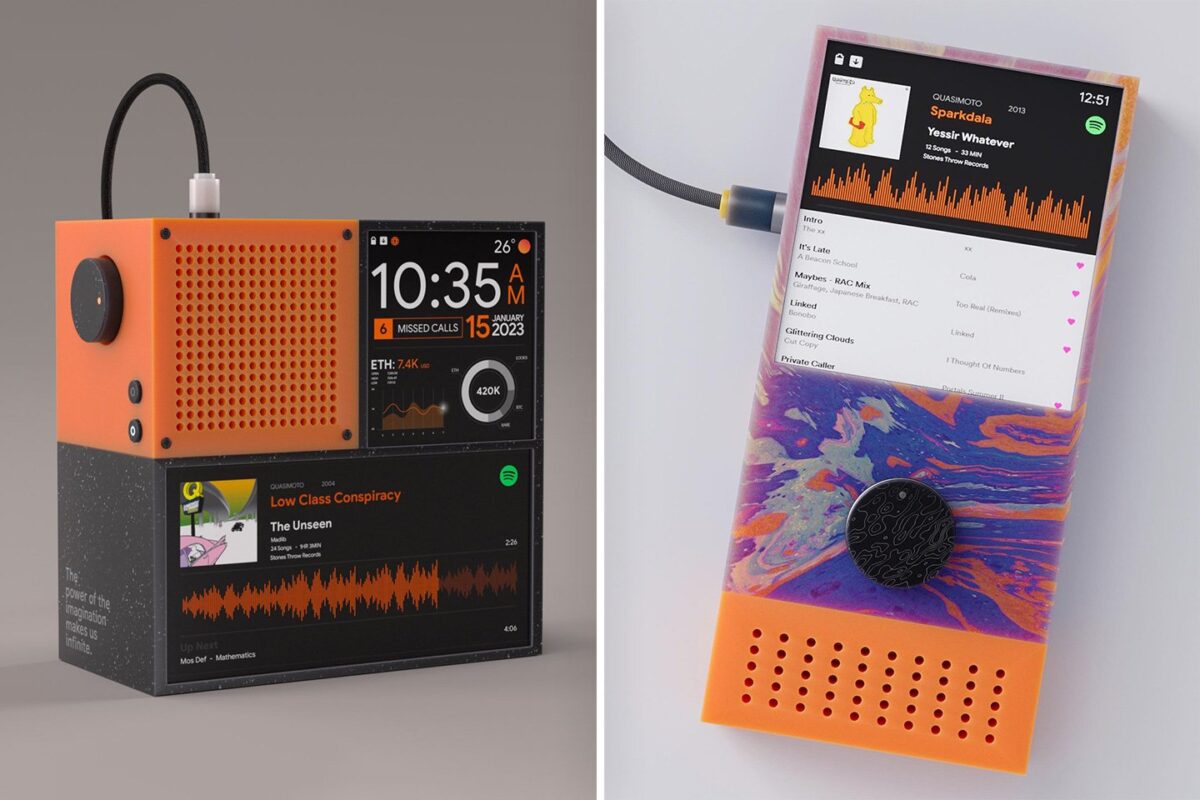
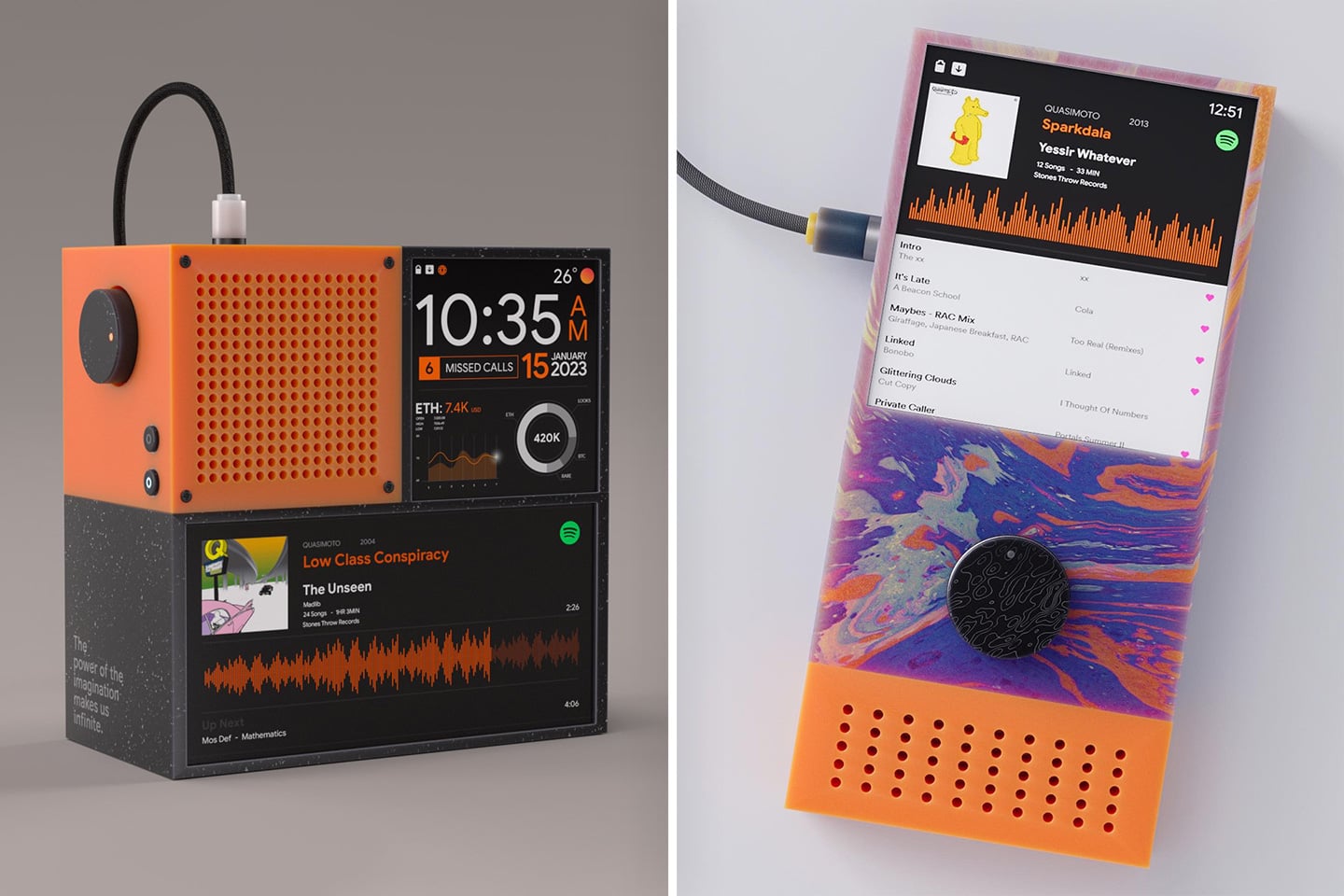
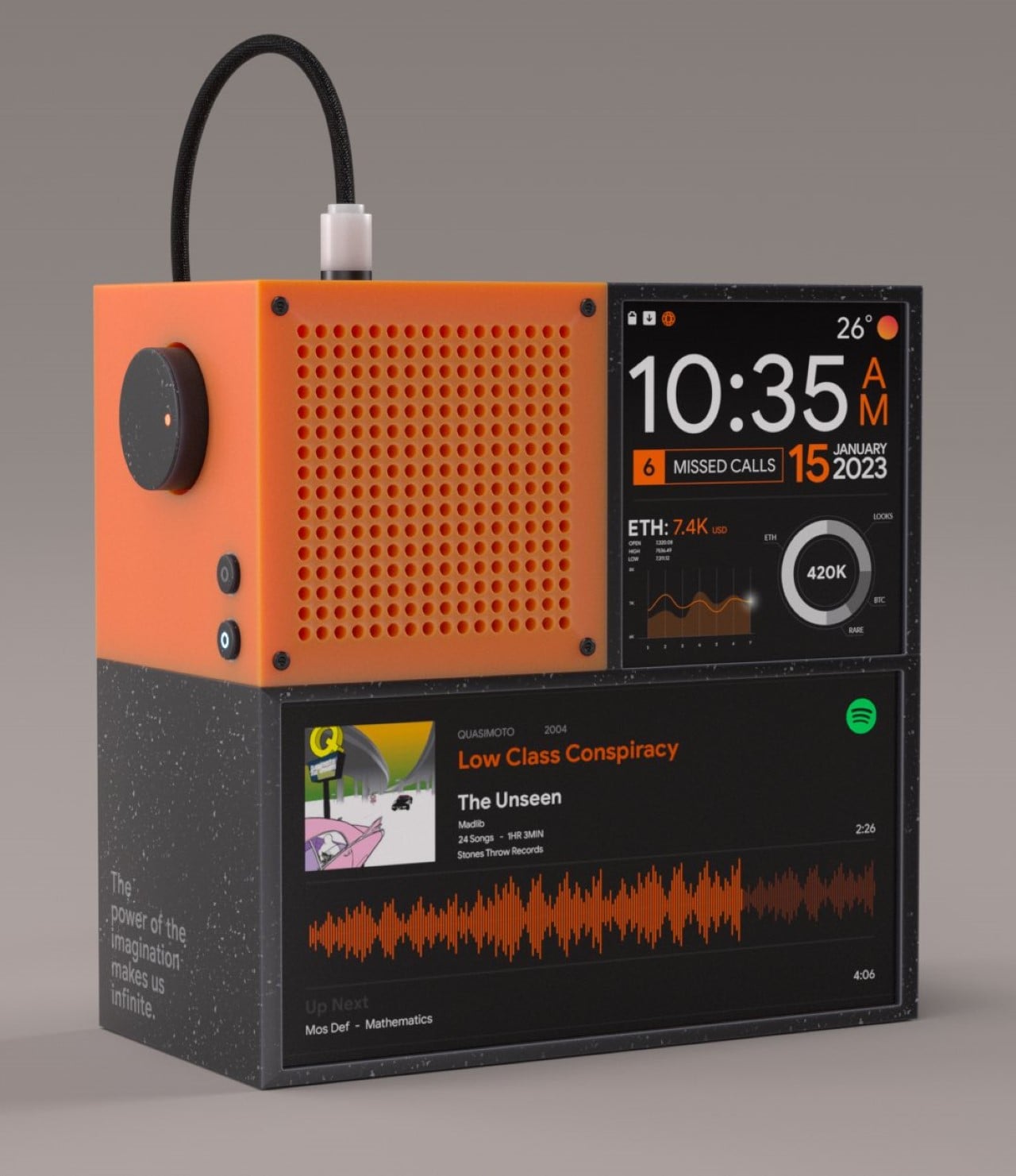
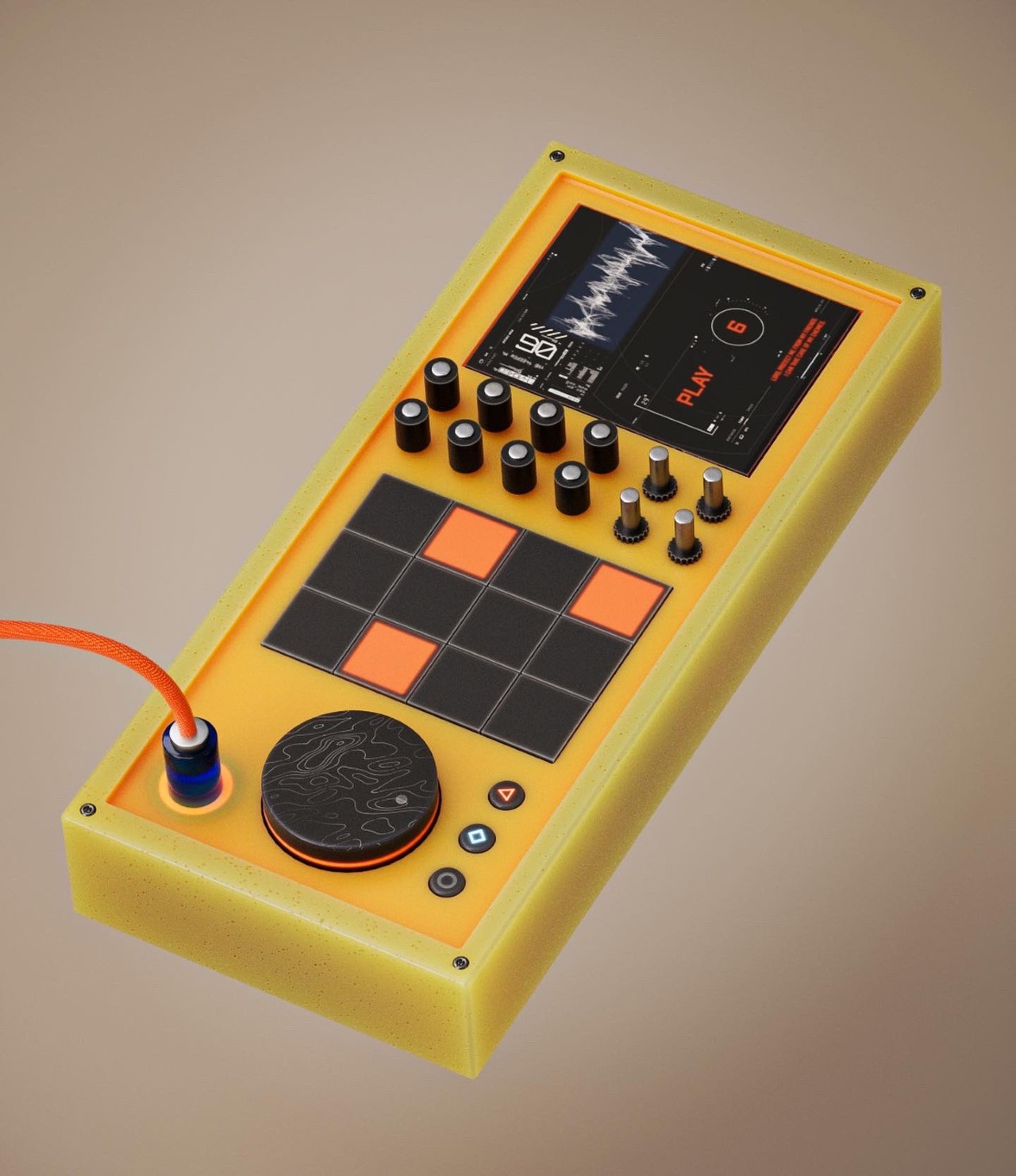
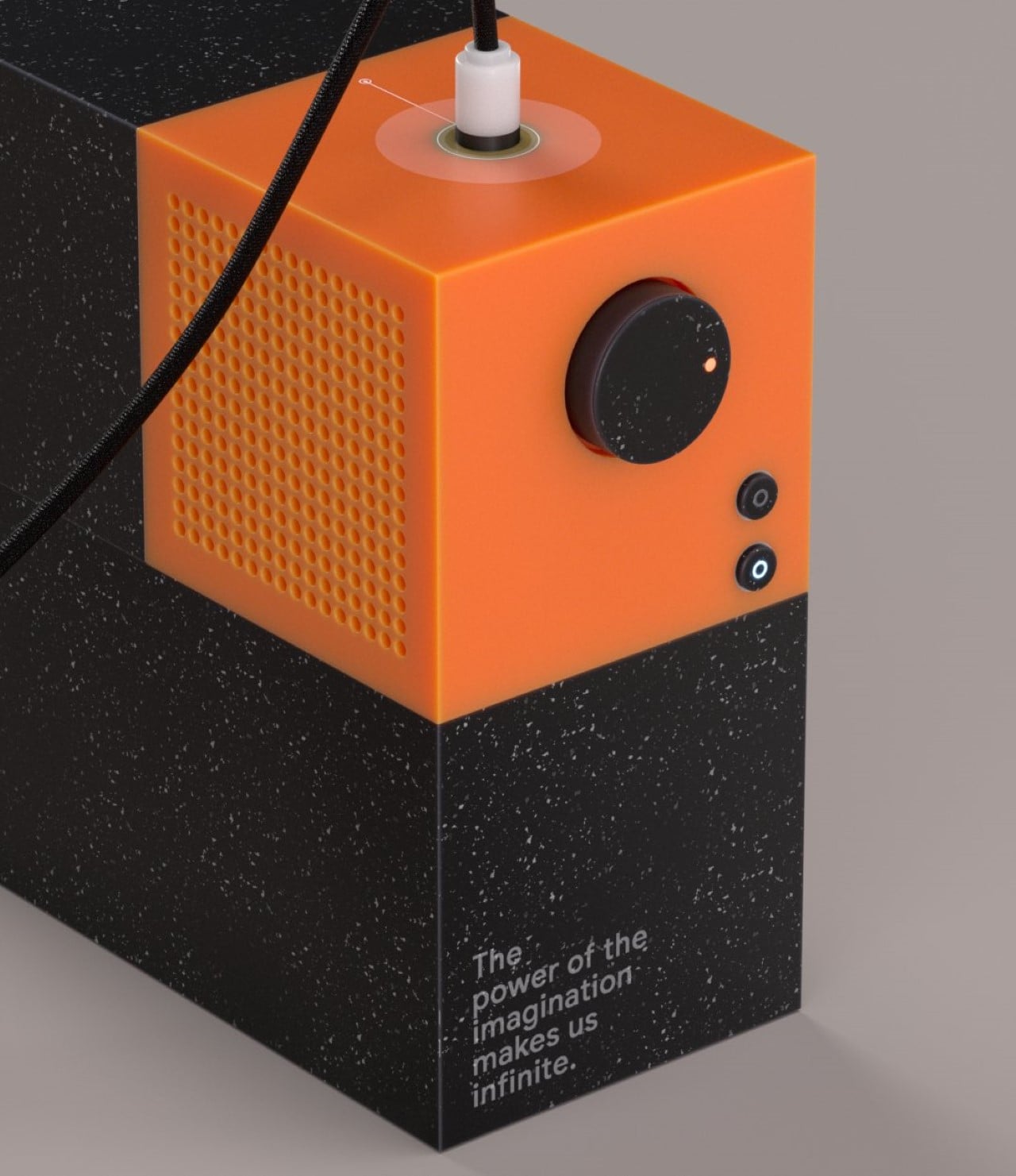
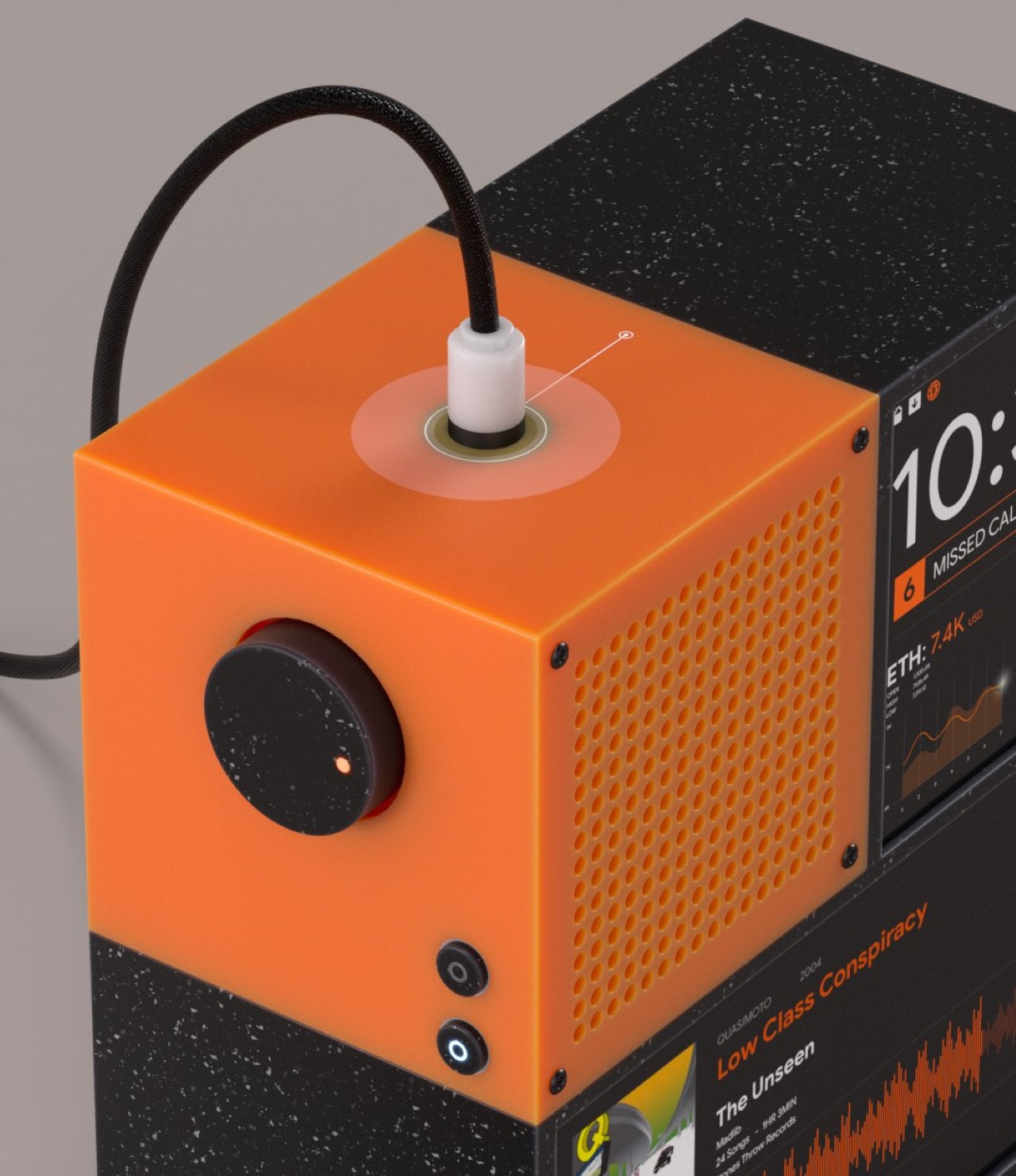
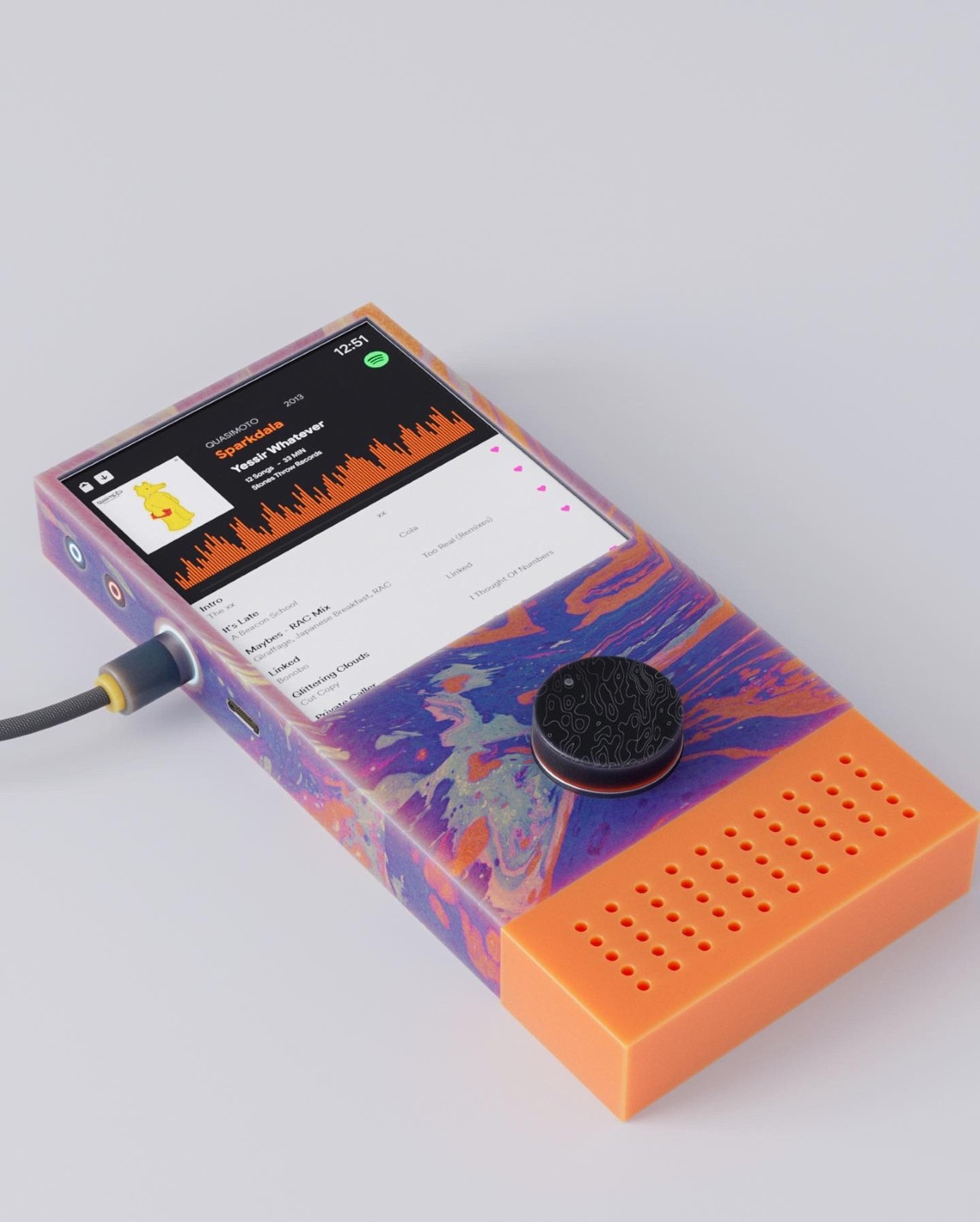
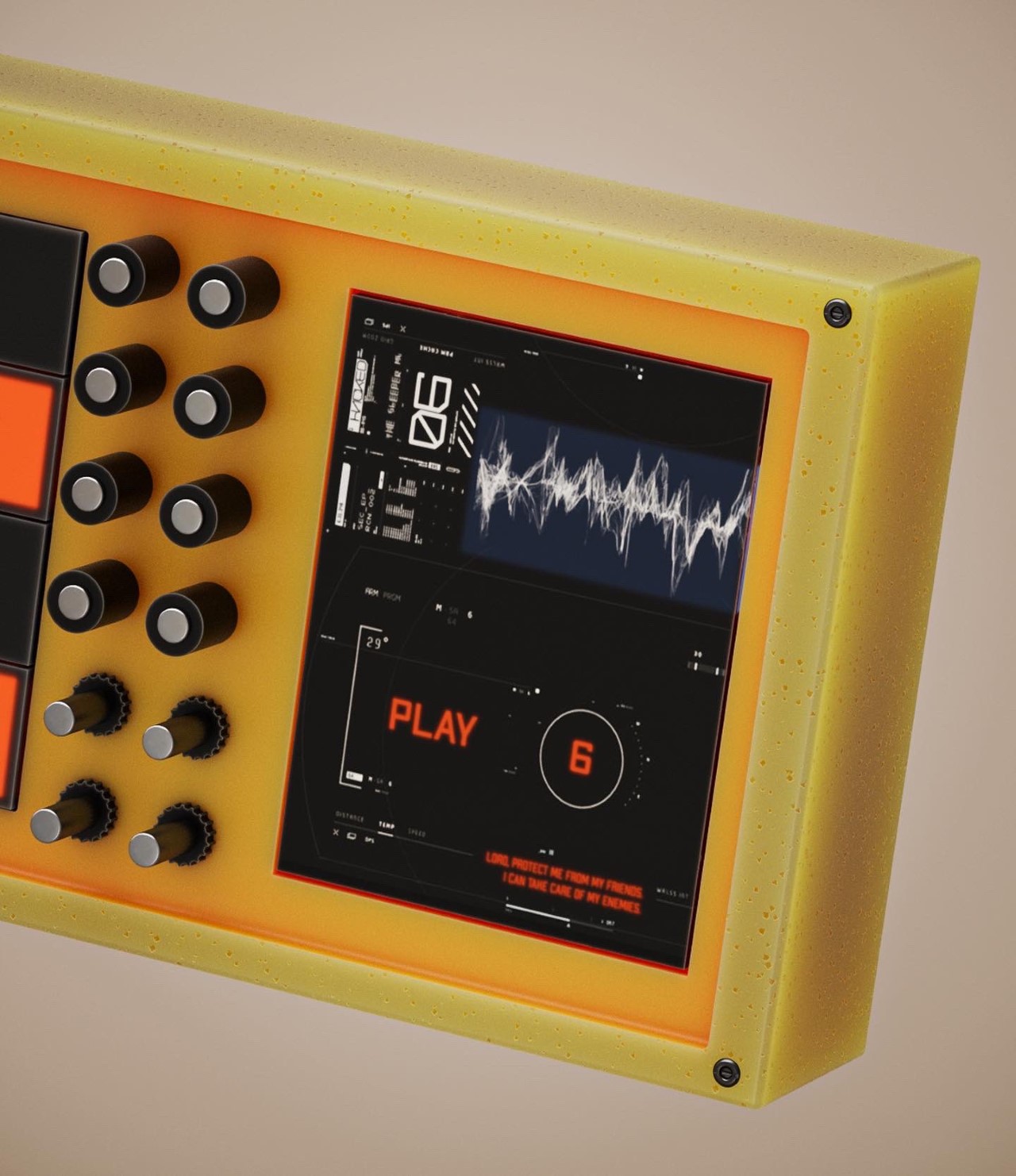
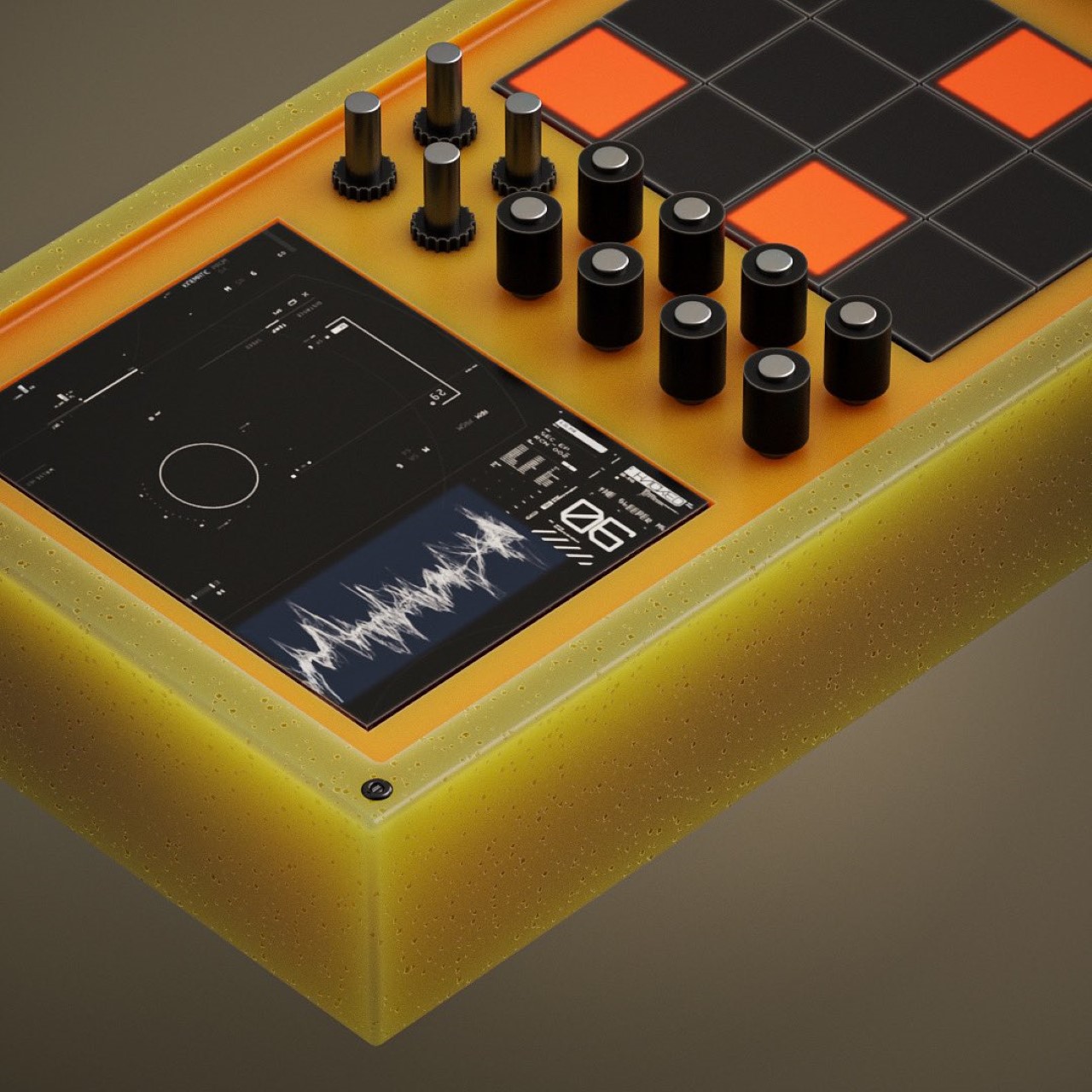
Looking like something out of Teenage Engineering’s mad-scientist-laboratory, the Customizable Bluetooth Speaker is a visual concept by artist and designer Max Quest. The design incorporates a LEGO-style brick/grid system that allows you to plug modules together to create the audio hardware you’re looking for. Quest designs are based on modular synthesis and seek to build an ecosystem of visually identical modules, allowing them to be plugged together in a beautiful mosaic.
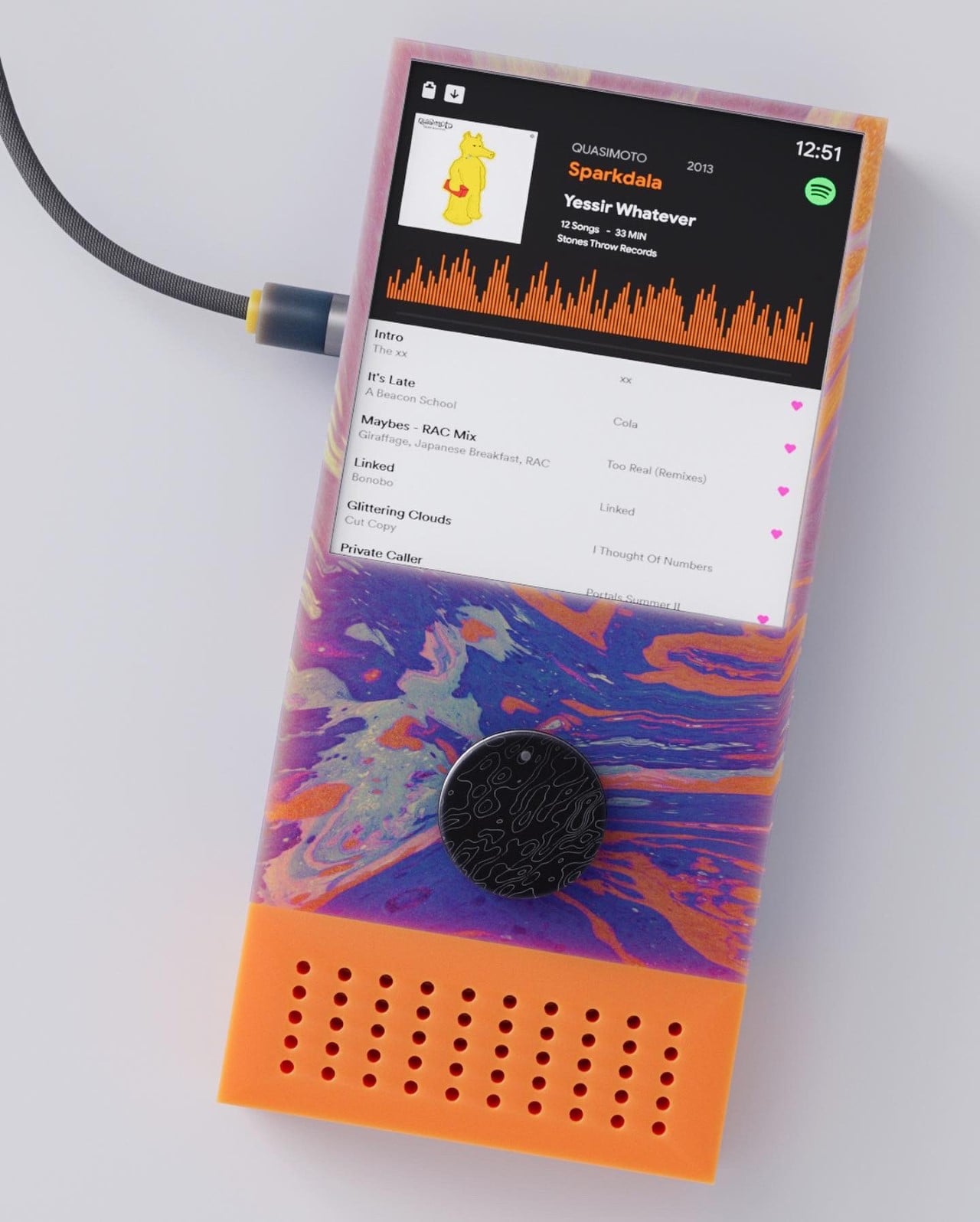
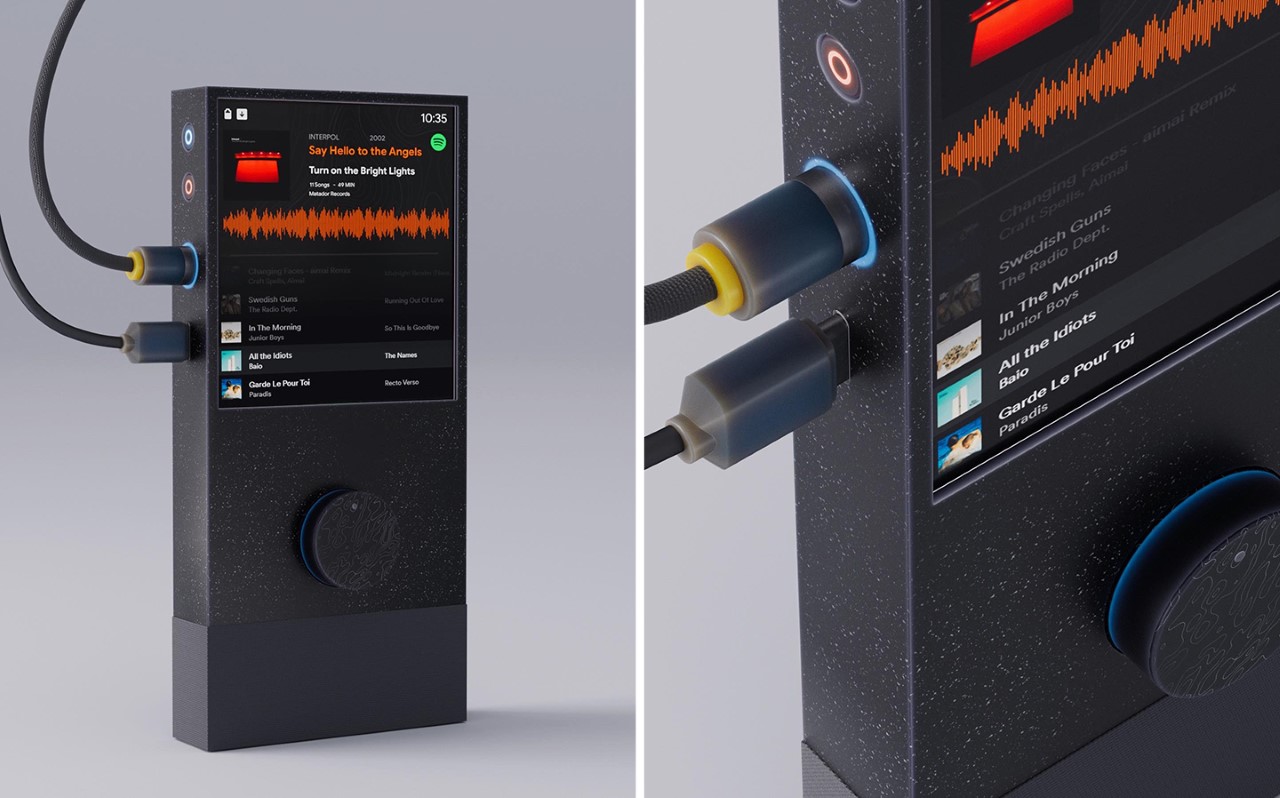
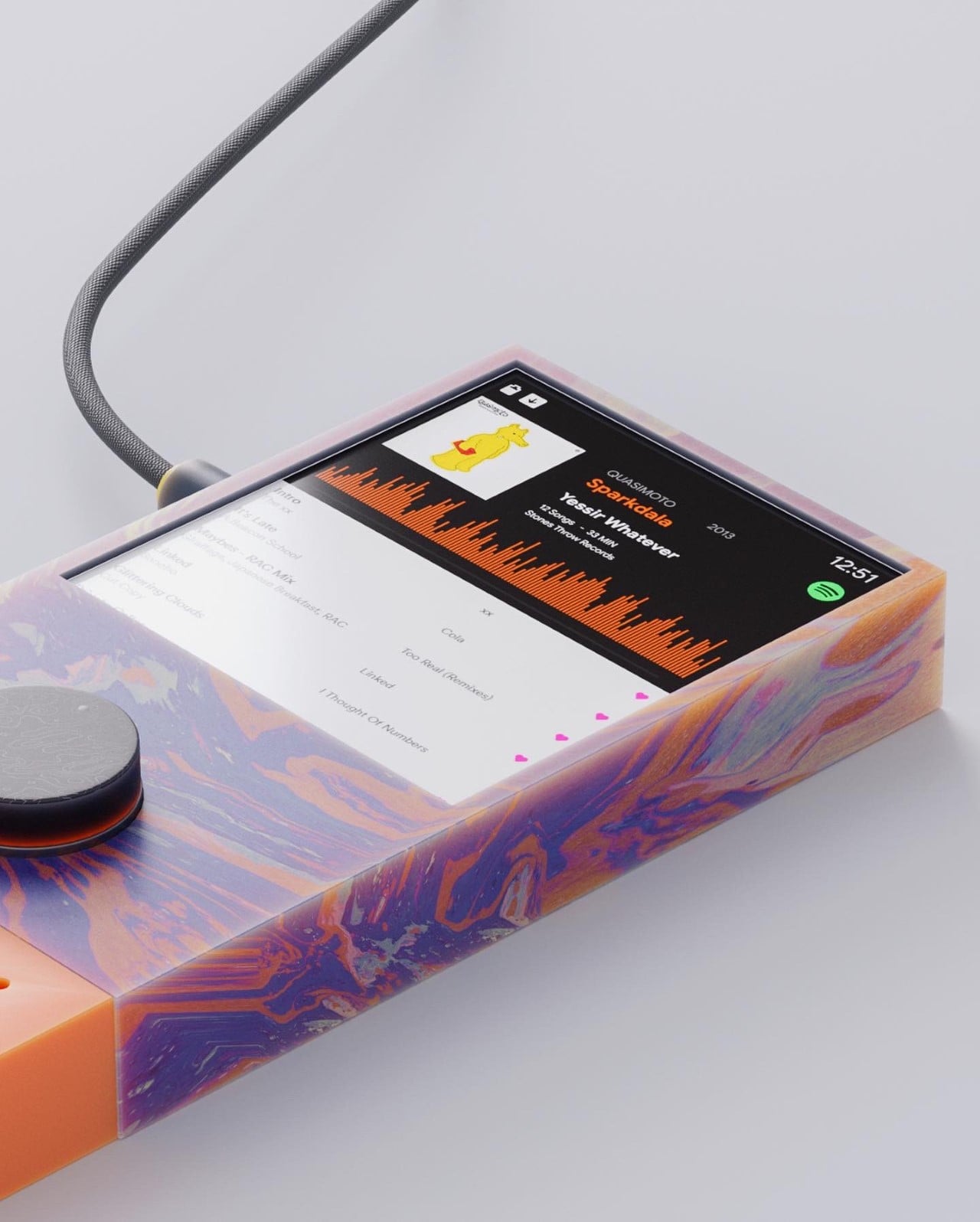
Quest’s modules cover many different needs, including those of professionals and consumers. At the very heart of the speaker is the audio driver itself, which can be plugged into a screen (oriented in either landscape or portrait, depending on your needs). You can control playback using your Bluetooth device, or the touchscreen interface. The volume knob is included in each speaker module. There are many options. There are many options available to add additional screens, such as notifications or modules that allow you to play with the audio signal (e.g. MIDI interfaces). to effectively turn your speaker into a synth or STEM player/mixer.
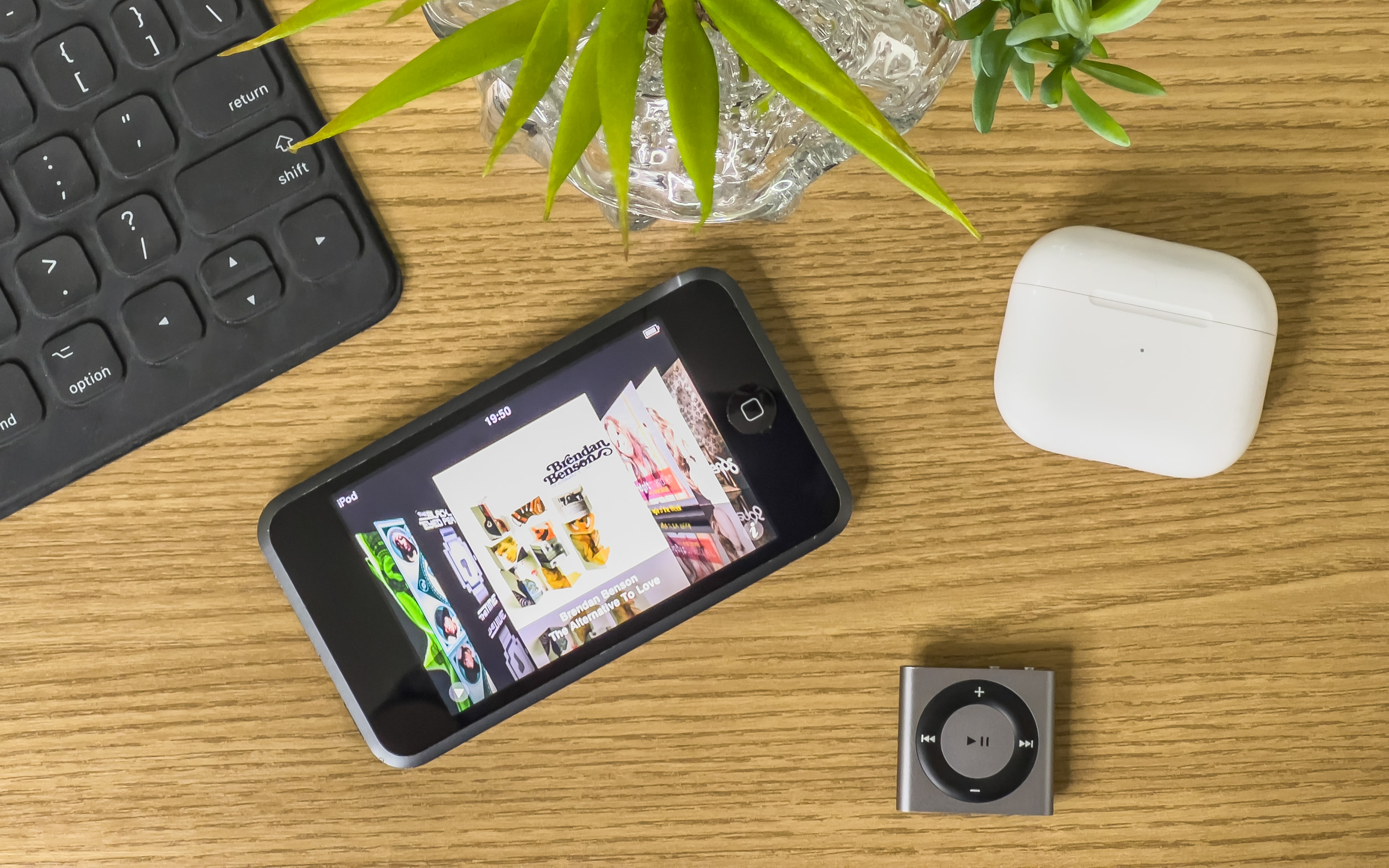
Some of these modules echo a simplicity that’s reminiscent of MP3 Players from decades ago – rather fitting, considering Apple finally bid adieu to the iPod today.
Quest’s design language remains one of my favorite things about this design. Teenage Engineering’s “Fun-dustrial” approach to design is responsible for the raw appeal of Quest’s designs. Quest uses vibrant colors, simple shapes, and unusual CMF choices like speckles, marbled plastic, etc. that make the speaker look almost toy-ish, and positively delicious.
Ultimately, the Customizable Bluetooth Speaker’s appeal is absolutely universal. The speaker’s simple design appeals to both children and adults. It can also be customized to meet your specific needs, making it a great choice for professionals and amateurs alike.
Sadly though, this speaker is just conceptual for now. Quest’s idea was created more to prove his modeling and designing skills than it was as a proof-of-concept. It would have been fun for Quest to just build some prototypes. Perhaps a collaboration with Love Hulten?
Realme GT Neo 3T shows up on Geekbench with Snapdragon 870
It really hasn’t been that long since Realme launched the GT Neo3, but the company is already working on a slightly different variation of it. This will be called GT Neo 3T, as we heard earlier today, and it’s already done the certification dance in some places. That means its release isn’t very far off.
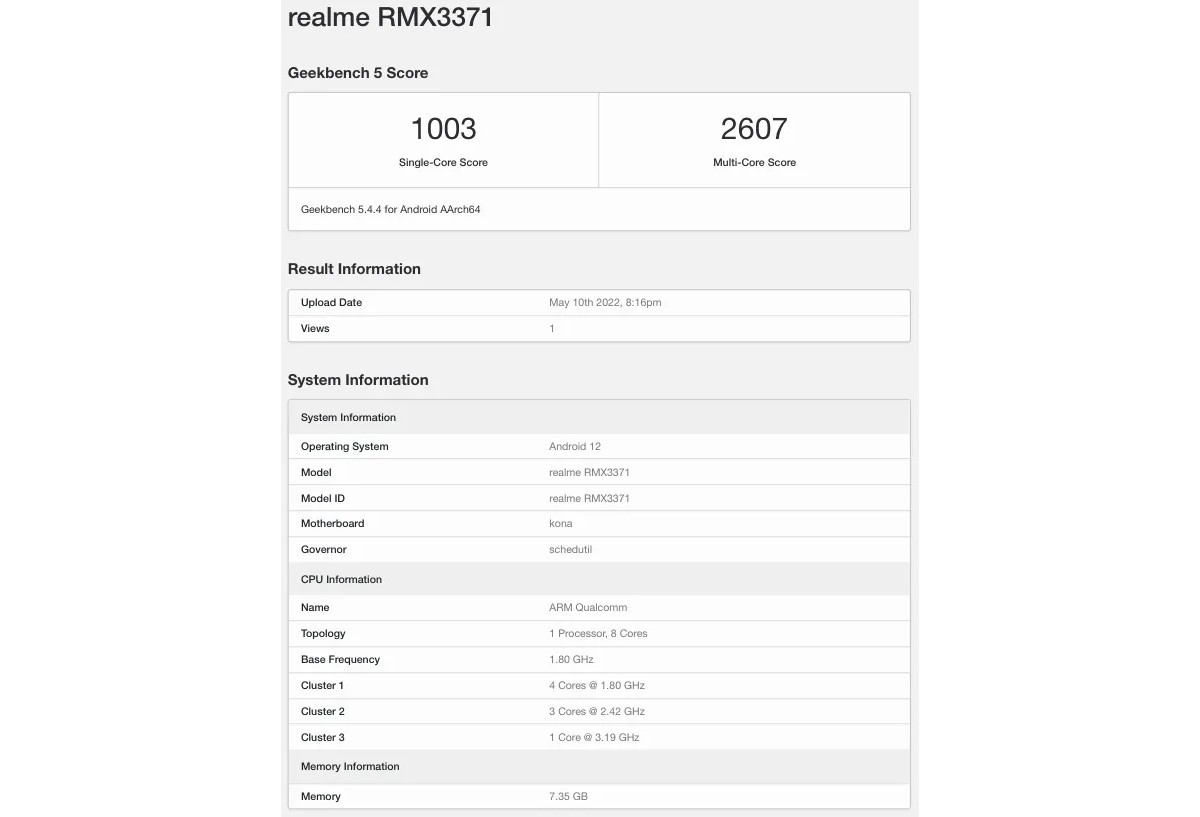
To sort of confirm that the GT Neo 3T has also been spotted in the Geekbench database, since someone in possession of a prototype evidently put it through the paces of the benchmark. This has revealed the fact that unlike the Neo3, which is powered by MediaTek’s Dimensity 8100 chipset, the Neo 3T will have Qualcomm’s aging Snapdragon 870 at the helm instead.
This will be complemented by 8GB of RAM (though multiple memory versions are likely to be offered). Unsurprisingly, the GT Neo 3T will run Android 12 from day one with Realme UI 3.0 on top. For what it’s worth, the prototype managed a 1,003 single-core score and a 2,607 multi-core score in Geekbench 5.
According to a different listing, the Realme GT Neo 3T is expected to have a 64 MP main rear camera and a 16 MP selfie snapper. And thanks to the aforementioned certifications, we also know that there’s going to be a 256GB version, and that the Neo 3T has a 6. 5″ screen.
Now that the floodgates have opened, expect many more leaks about it to surface in the following days and weeks, so stay tuned.
AT&T becomes first US carrier to support 911 location-based routing
AT&T has announced that it’s the first carrier to use location-based routing for 911 calls across the country. This feature allows AT&T to more quickly and accurately detect where a wireless 911 call is coming from. It utilizes the device’s GPS and hybrid information to direct the call to the correct call center.
With the location-based routing feature, a device can be located and routed within 50 meters of its location. Before, 911 calls were routed based on the location of cell towers – typically a 10-mile radius. Calls made from areas that overlap with the boundaries of a state, county or city could delay emergency response.
AT&T has also said that the location-based routing feature only turns on when someone calls 911. It was clarified that the only people receiving your location information are the dispatchers at the call center. Additionally, AT&T is now the only carrier with FirstNet, using end-to-end emergency communication solutions to support those in public safety.
“Providing our customers with reliable connectivity and high-quality service on America’s largest wireless network is what we strive for everyday at AT&T. This industry-leading solution for public safety allows us to improve connectivity and efficiency of wireless customers. We can also offer more precise service .”
when we make emergency calls.
Chris Sambar, EVP, AT&T
The rollout is happening right now across the United States. The location-based routing service is available already in Alaska, Colorado and Hawaii as well as Idaho, Montana, Oregon and Washington. More regions will join the rollout in the coming weeks and the rollout will be complete by the end of June.
2021 MacBook Pro users complain about crackling and popping audio issues
The 2021 MacBook Pro was introduced only six months ago, and yet a number of users seem to be experiencing audio issues. More specifically, they complain about the speakers crackling and popping when there’s any sound output being played.
Multiple complaints can be found on the Apple Community forum and also on Reddit. According to the users affected, the issue occurs randomly when there is a song, video or other audio on the MacBook. This popping sound is more apparent when volume levels are high or have high pitch sounds.
I’m having an issue with the 2021 M1 Pro 16-inch (Base Model). When I watch videos, or listen to music on my laptop’s speakers, crackling sounds are heard. I had this same issue with the M1 Max which I exchanged for this M1 Pro.
This issue is most common when I have multiple videos open at once or when I am opening a new window. It gets really annoying when it constantly does it throughout the video. This doesn’t always happen.
A 9to5Mac reader sent us a video showing the audio issue on a 14-inch MacBook Pro, and it is definitely noticeable. Some of the affected users believe that the issue is a software bug, as Apple has replaced their machines and yet the bug has persisted.
A Reddit user corroborated this theory by saying that the problems can be temporarily fixed after killing the macOS process “coreaudiod” by going to the Activity Monitor app. Some users claim that the issues disappeared after installing macOS 12. 3, but other users are still experiencing crackling speakers.
At this point, Apple is yet to acknowledge that there’s a problem with the 2021 MacBook Pro, whether it’s a hardware or software malfunction. Have you been affected by the crackling speaker issues with your 2021 MacBook Pro? Please let us know by commenting below.
Multiple FIFA-branded soccer video games coming in 2022, FIFA says
Some people might find it tough to put themselves back out there immediately after the breakup of a three-decade relationship. FIFA, the international governing body for soccer, has announced Tuesday that they have an ambitious plan to create multiple FIFA-branded videogames with different developers and publishers. This announcement came just hours after Electronic Arts, its former licensing partner, had announced its intention to end its relationship with FIFA.
Until now FIFA held an exclusive license agreement with EA to make both non-simulation and simulation soccer games. This meant that only EA had the rights to use FIFA’s name and logos. That deal was set to expire this year, but the parties have signed a “short-term extension,” according to FIFA, under which FIFA 23 will be the last EA game to carry FIFA branding. EA’s soccer franchise, which debuted in 1993 with FIFA International Soccer on Sega Genesis, will be retitled EA Sports FC as of July 2023.
When it is released this fall, FIFA 23 will — for the first time — not be the only FIFA-branded soccer video game on the market, although it will be the only simulation soccer game on the market. The aforementioned extension between FIFA and EA “grants rights for the simulation football category only, freeing up broader gaming rights for FIFA and different gaming publishers to launch new games and more deeply immersive experiences for fans and football stakeholders,” said FIFA.
FIFA has announced that “a variety of new simulation games” are in production and will be released this fall. However, it didn’t name the publishers or developers involved. The first of these titles will be focused on the 2022 World Cup, which will take place in Qatar from November to December. FIFA said it is also in discussions with partners for gaming projects centered around the 2023 Women’s World Cup, which will be hosted by Australia and New Zealand next summer. (Both tournaments will appear in FIFA 23 as well. )
Following the rollout of these nonsimulation games in 2022 and 2023, FIFA’s plan is to have a FIFA-branded simulation soccer game back on the market in 2024. According to the organization, it was “currently in dialogue with top game publishers and media companies as well as investors” regarding this project. It’s worth noting that for more than a decade, EA Sports FIFA has had only one real competitor: Konami’s Pro Evolution Soccer series, which the publisher relaunched in 2021 as eFootball with disastrous results. It will be no easy task for FIFA to find a partner, or for that company to spin up a simulation soccer game from scratch within just two years — let alone for the game to come close to achieving the depth, breadth, and quality of EA’s firmly entrenched franchise.
FIFA had previously signaled that it intended to move to a system of nonexclusive licensing deals for video games and esports, saying in October 2021 that “this needs to be a space that is occupied by more than one party controlling all rights.” The organization was returning fire toward EA, which had fired the first salvo one week earlier, when EA Sports chief Cam Weber announced that the publisher was reevaluating its long-running arrangement with FIFA.
Between the releases of those two statements, the New York Times reported that the dispute between the two parties was primarily a financial one — EA paid approximately $150 million annually to FIFA for the rights, and FIFA was looking to renew the contract at more than double that amount — but also that they disagreed on the extent of the rights. FIFA wanted the freedom to explore opportunities in the gaming and esports space outside of its arrangement for EA’s video games, while EA wanted to retain control of everything FIFA-related in the world of gaming. After all, for millions of people, the FIFA name is synonymous with EA Sports as shorthand for the gaming franchise.
That will likely remain true for some time, at least, no matter what EA and FIFA do.
FIFA, for its part, included a blustery statement from its president, Gianni Infantino, in its announcement Tuesday: “I can assure you that the only authentic, real game that has the FIFA name will be the best one available for gamers and football fans. The FIFA name is the only global, original title. FIFA 23, FIFA 24, FIFA 25 and FIFA 26, and so on — the constant is the FIFA name and it will remain forever and remain THE BEST.”
And while EA Sports FC is a perfectly reasonable name for EA to choose in its rebranding effort, it’s going to be a while before the masses stop referring to the franchise as “FIFA,” especially if FIFA’s own simulation game stumbles out of the starting gate like eFootball did.
Apple releases new firmware for AirPods 2, AirPods Pro, and AirPods Max; here’s how to check
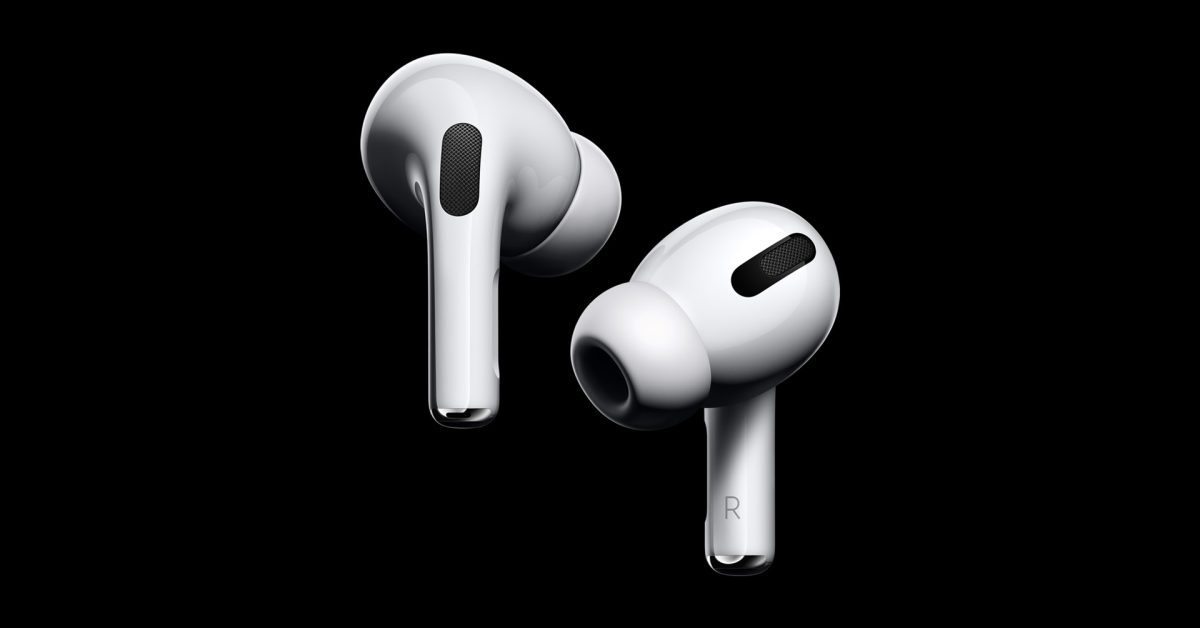
Apple is rolling out a new firmware version for AirPods 2 and AirPods Pro users today. The update rolling out today brings the two devices to firmware version 4E71. Head below for details on how to update.
Update: Apple has also now started rolling out a firmware update for AirPods Max, bringing the over-ear headphones to version 4E71 as well. The update is also now rolling out to AirPods 3.
Today’s updates are rolling out to AirPods 2, AirPods Max, and AirPods Pro, but not AirPods 3 or any Beats headphones. The update comes with version number 4E71, which is an increase from the previous version of 4C165.
Unfortunately, Apple does not provide release notes for AirPods firmware updates. Instead, users have to wait for the update to hit their AirPods 2 or AirPods Pro, then poke around to find out if anything has changed.
How to update your AirPods Max, AirPods 2, and AirPods Pro
As you probably know by now, Apple also does not make it easy to manually update your AirPods to new firmware versions. Instead, the company said new firmware versions will install when the AirPods are connected via Bluetooth to your iPhone.
To check your AirPods firmware version:
Open the Settings app on your iPhone
Navigate to the “Bluetooth” menu
Find your AirPods in the list of devices
Tap the “i” next to them
Look at the “Firmware Version” number
If you spot any changes in the AirPods firmware update rolling out today, let us know down in the comments or on Twitter .