SOSwim Safety Bracelet for the kids alert you of danger and drowning
SOS means ‘Save Our Ship’ and people often use it not because their ship is wrecked but to express distress over a situation. The acronym is generally used in emergencies, and we believe it is something everyone in the world must be aware of.
When it comes to children’s safety, people must be aware of their surroundings. Adults must also prepare the basics like First Aid and know how to save a drowning child. You see, when it comes to kids’ security, safety, and privacy, you can never be too prepared.
Designer: Mariya Cherkasova
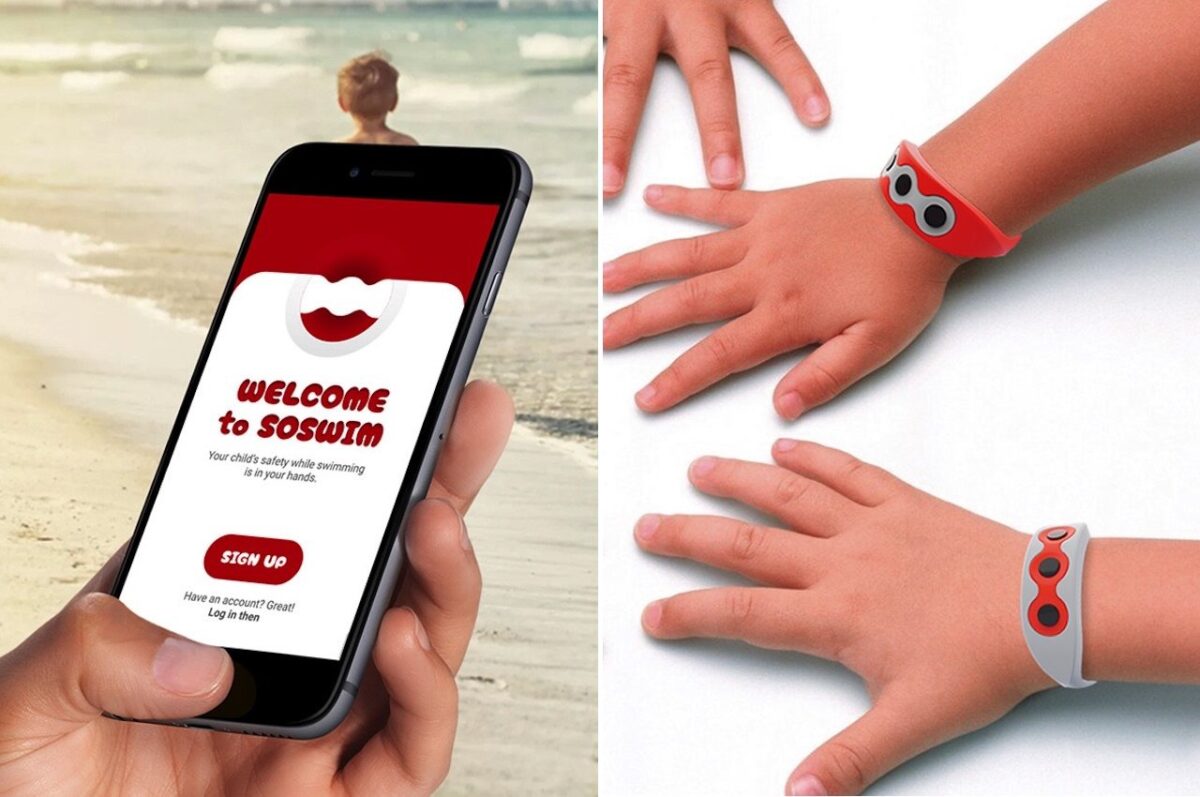
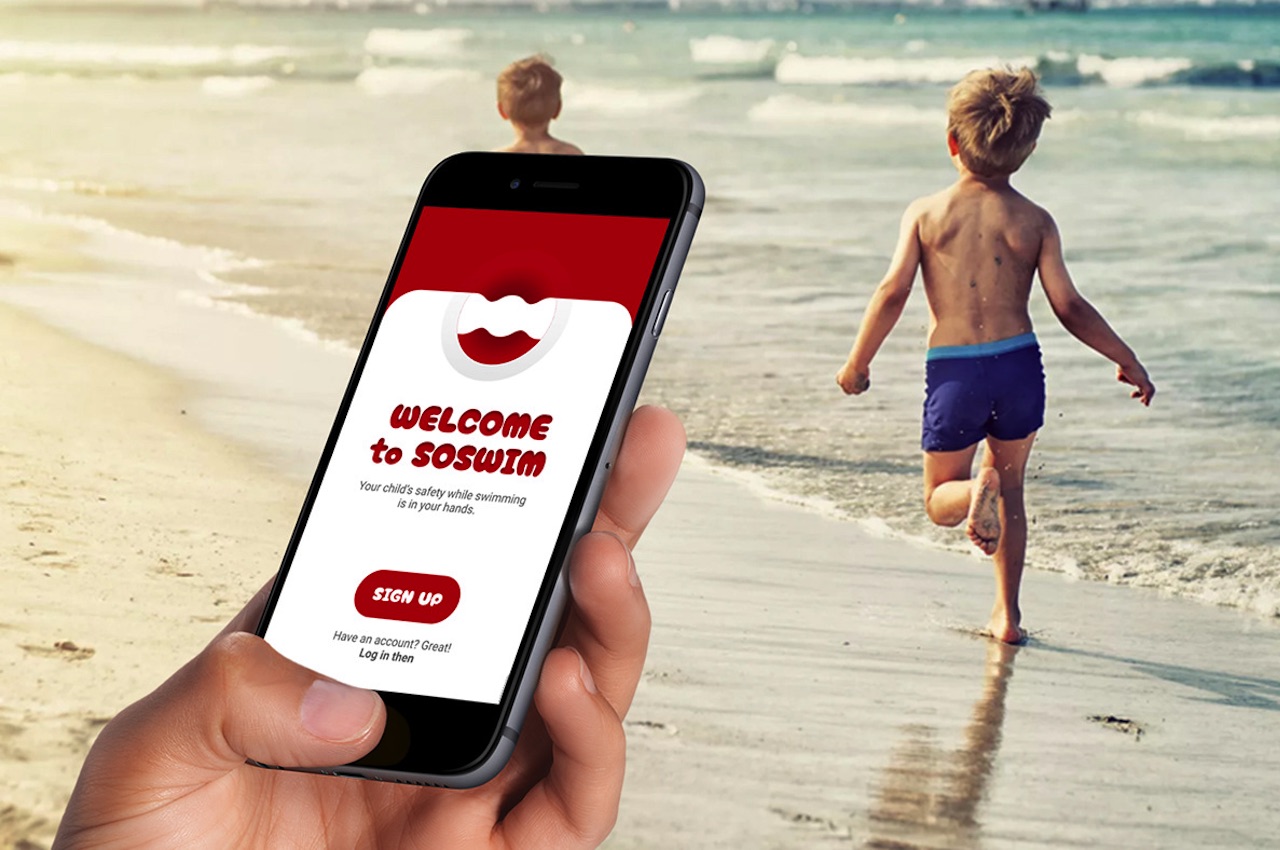
There are plenty of inventions and tools that can help parents and guardians. For example, this SOSwim is designed as a safety bracelet for children while swimming. Don’t say it is just another safety bracelet, as this one will really be helpful to parents who always worry about their kids.
The SOSwim Safety Bracelet will particularly be essential during summer when all the kids want to do is just frolic in the water. So when the children want to stay in the pool or the beach, you have to make sure they are safe. If they don’t know how to swim, look after them or have someone watch them. For additional peace of mind, get a safety bracelet like the SOSwim.
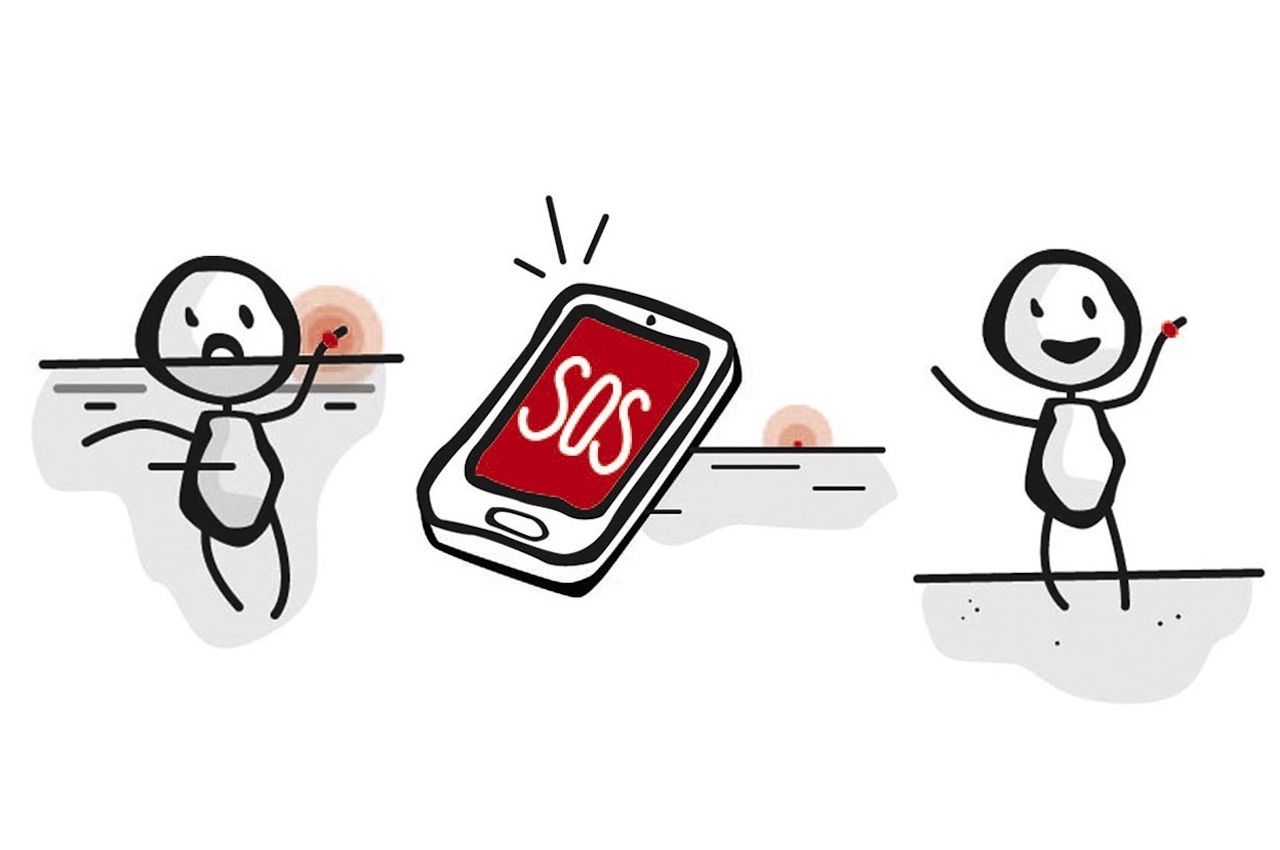
Drowning is a leading cause of accidental death among children. It can be painful and it’s something you don’t want to witness or experience. SOSwim has been designed to solve situations when people, kids especially, are helpless. What it does is simple: send a notification to an adult’s smartphone if the child starts to drown.
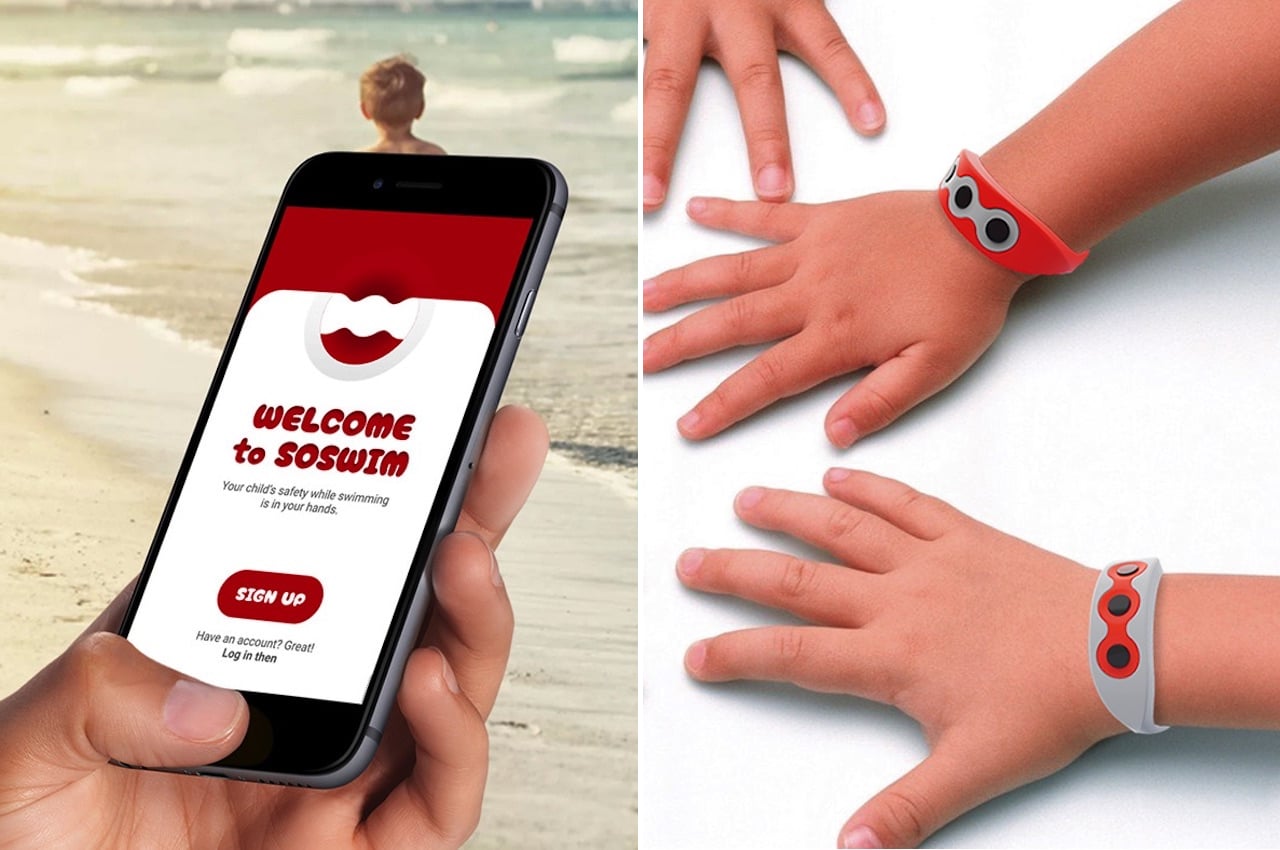
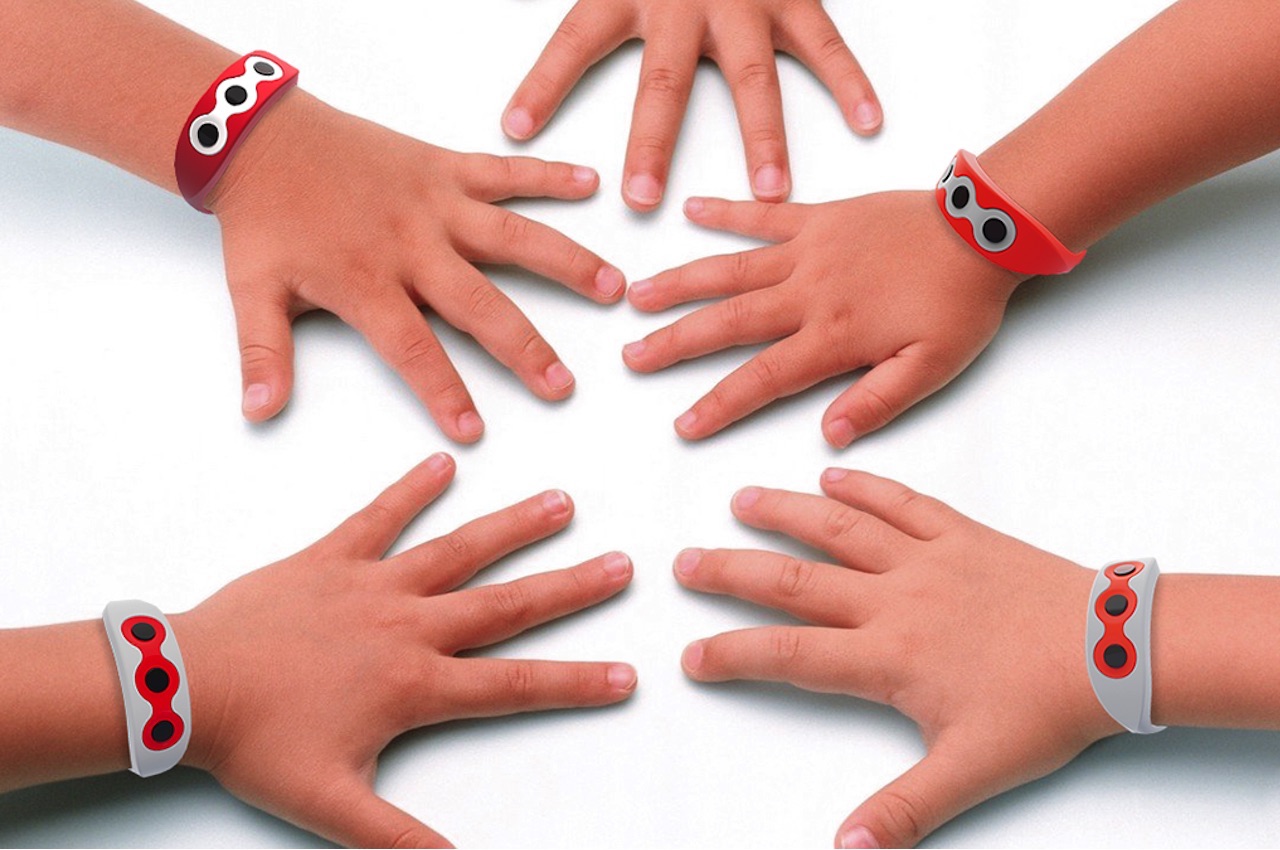
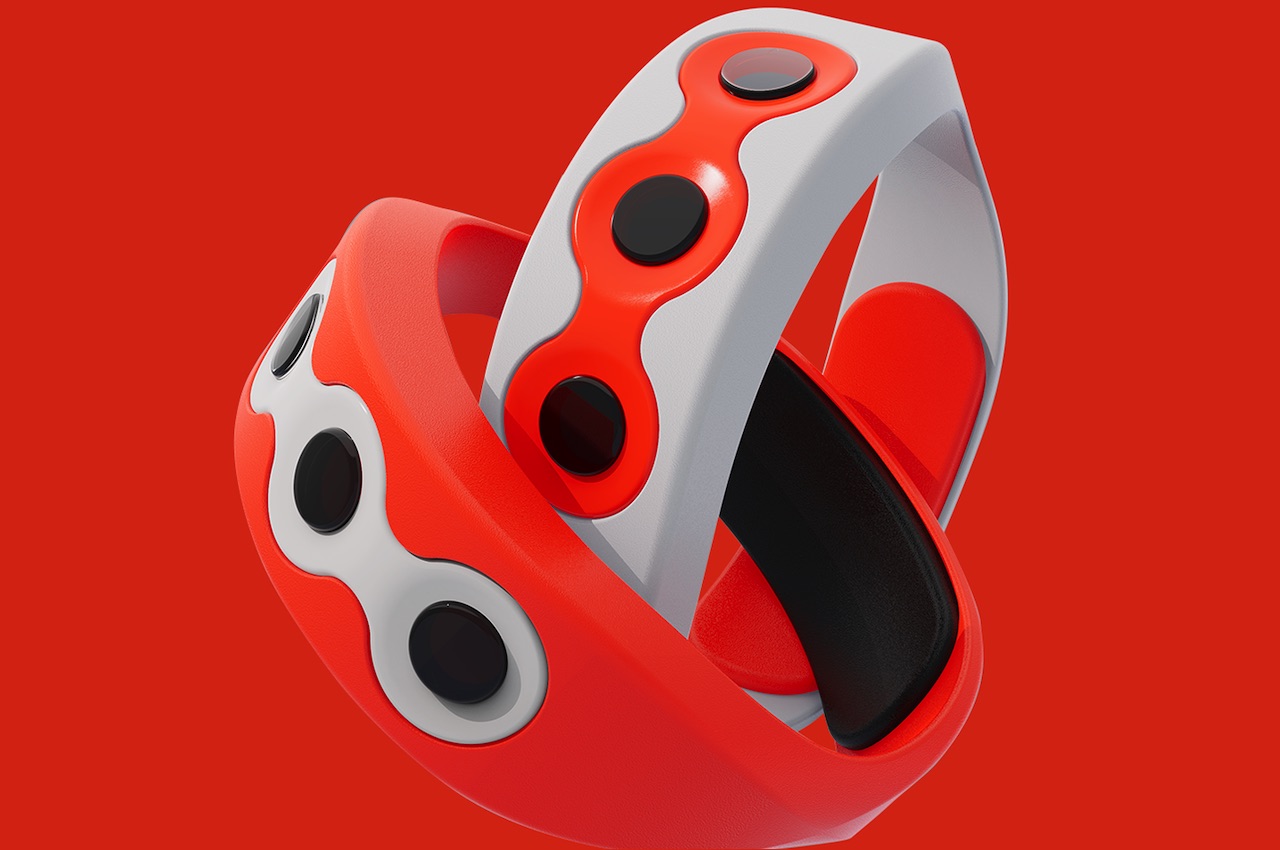
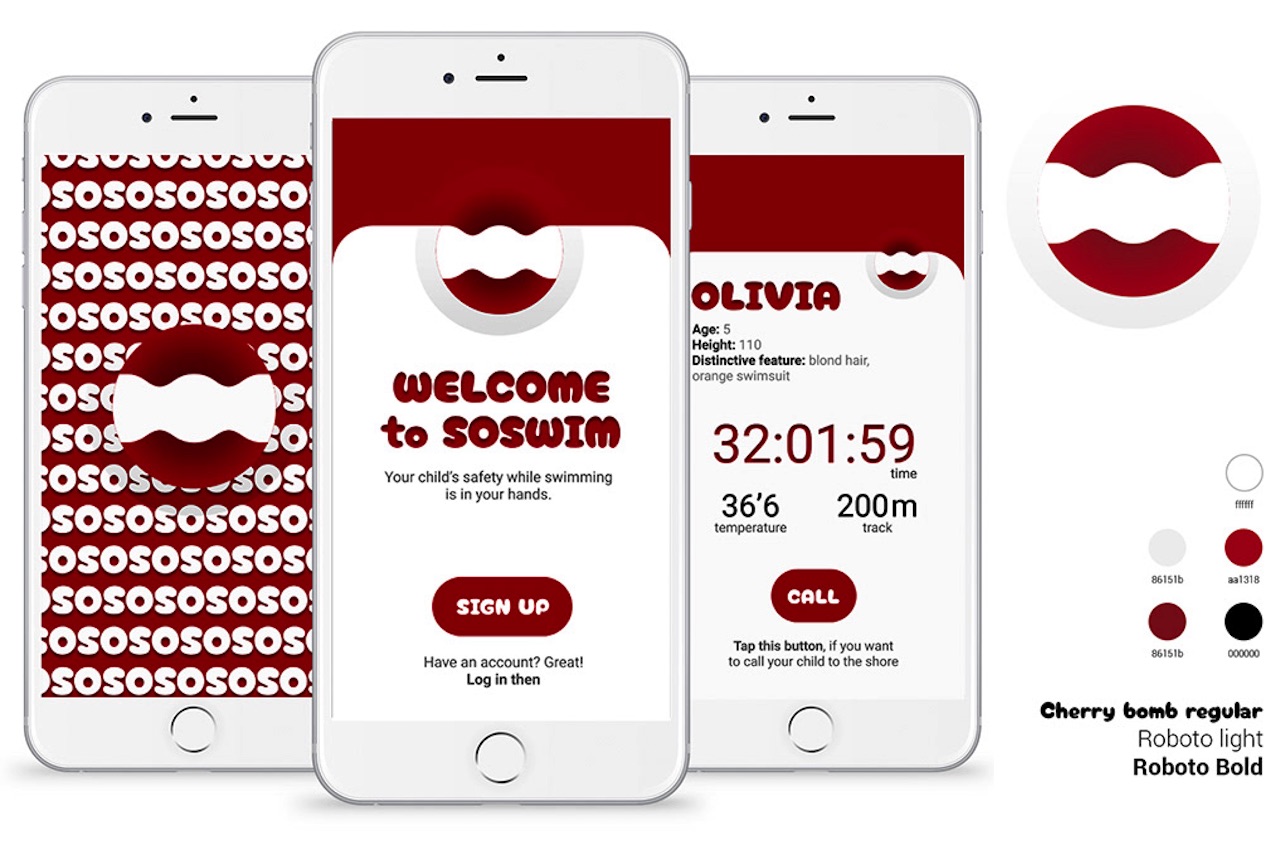
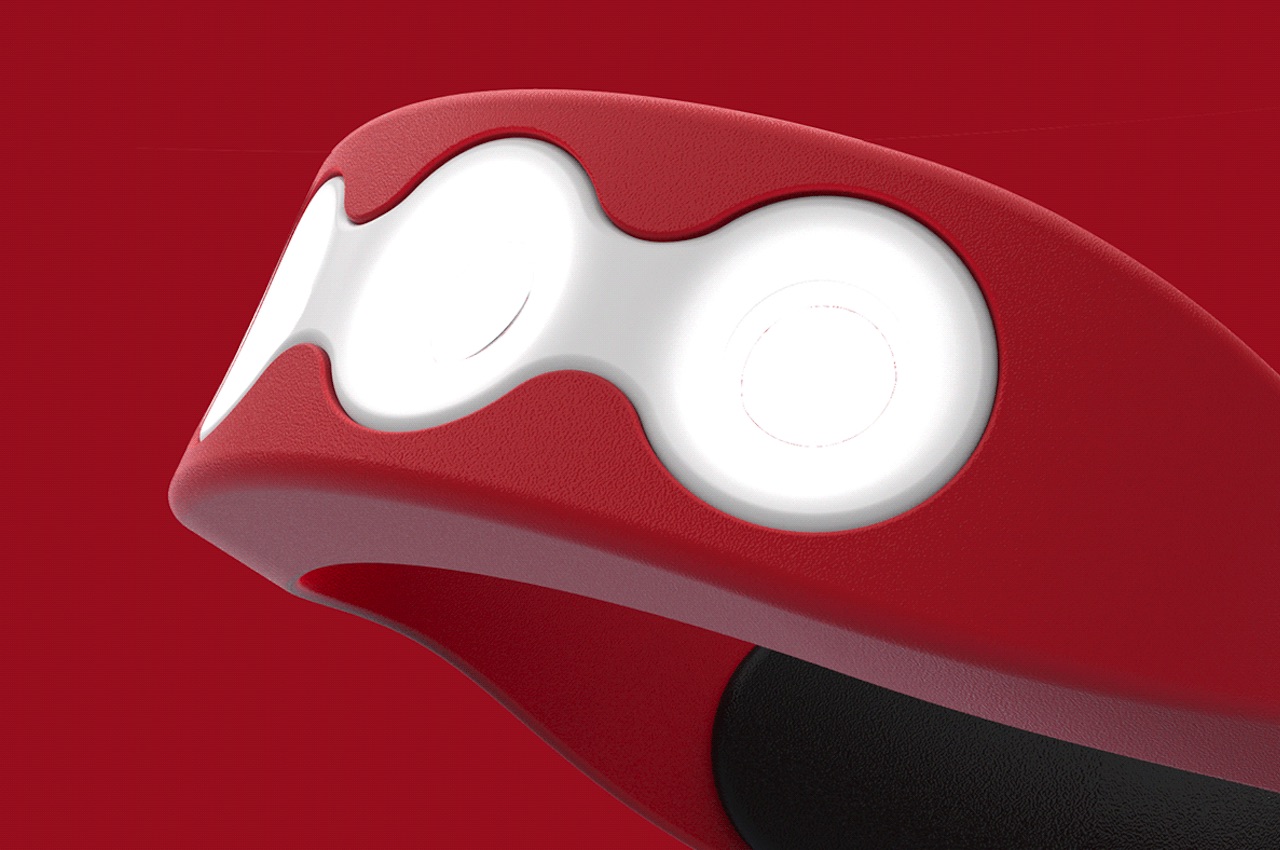
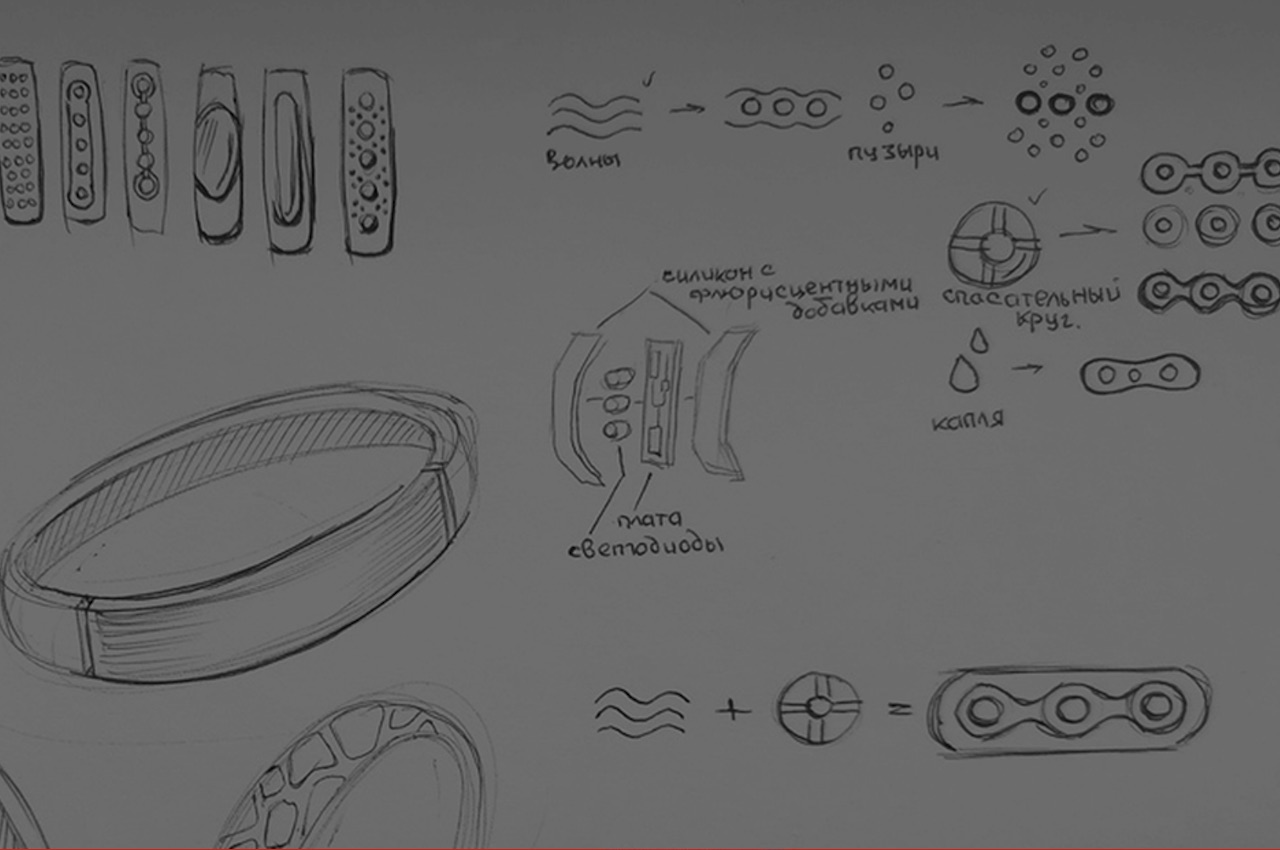
The design of the safety bracelet is based on a lifebuoy. This includes the shapes and the colors, while the sea wave design on the bracelet is where the LED lights are located. It works with a compatible mobile app where parents can see the alerts and see the children’s physical ability.
The app also works as a fitness tracker as it can tell you your child’s distance, time, and body temperature. This helps prevent the kid from hypothermia as you can quickly call him to get off the water for a while. The safety bracelet will flash to communicate with your child. Other details the app can show include the name of the kid, age, height, distinctive features, temperature, distance, and time.
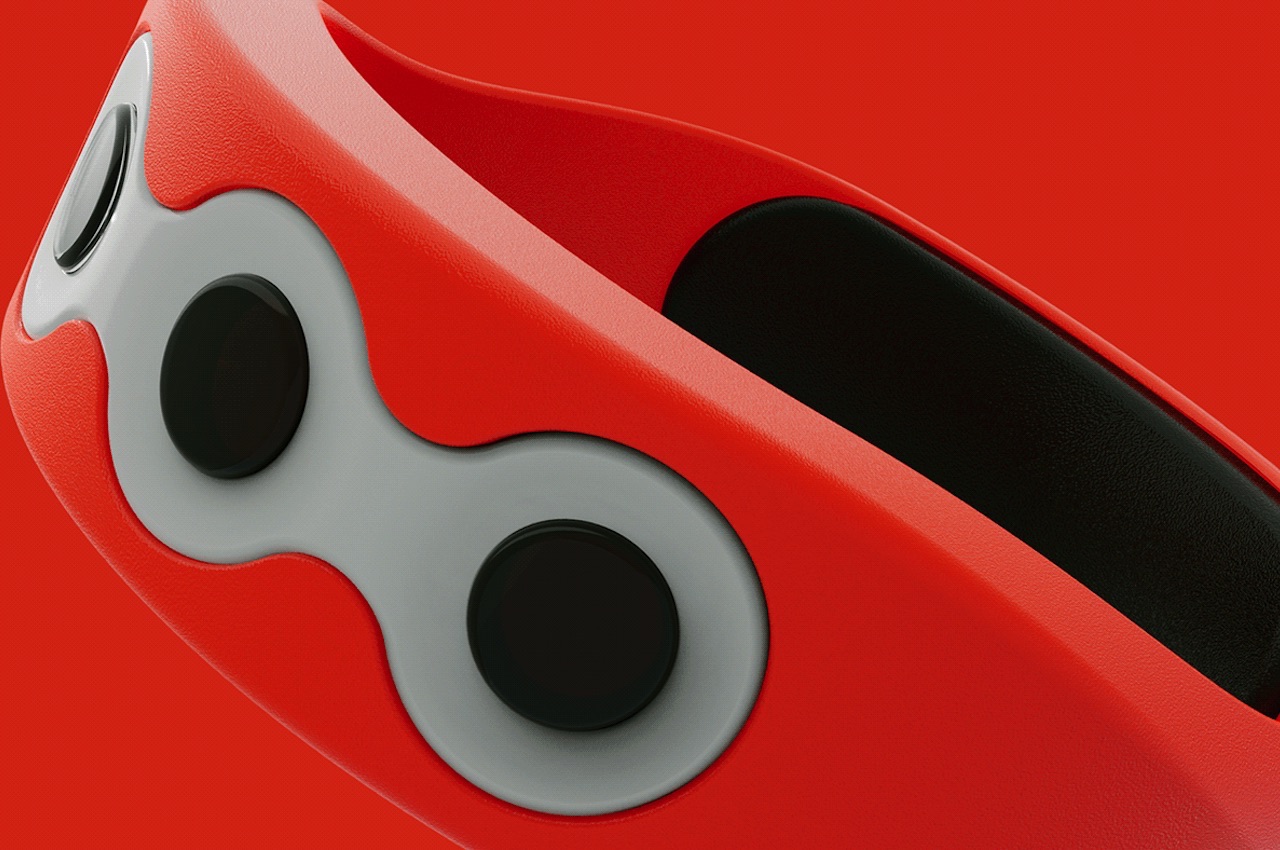
The bracelet is designed with photoluminescent silicone, which may help locate a drowning kid. The main signal light on the bracelet is composed of LEDs. It also features organic glass, 5mm LEDs, a heart rate monitor, Bluetooth connectivity, and a Micro Controller Unit (MCU).
Roblox ads are ‘exploiting’ users, FTC complaint from advocacy group says
Advertising in the metaverse is tricky.
Truth in Advertising, a nonprofit organization that aims to protect consumers from “false advertising and deceptive marketing,” filed a complaint Tuesday with the Federal Trade Commission alleging that Roblox has “completely shirked its responsibility” in following advertising laws on the kids gaming platform. The full complaint names several major U.S.-based corporations, including Netflix, Nike, Hasbro, and Mattel, as companies that have games on the platform that use deceptive marketing practices.
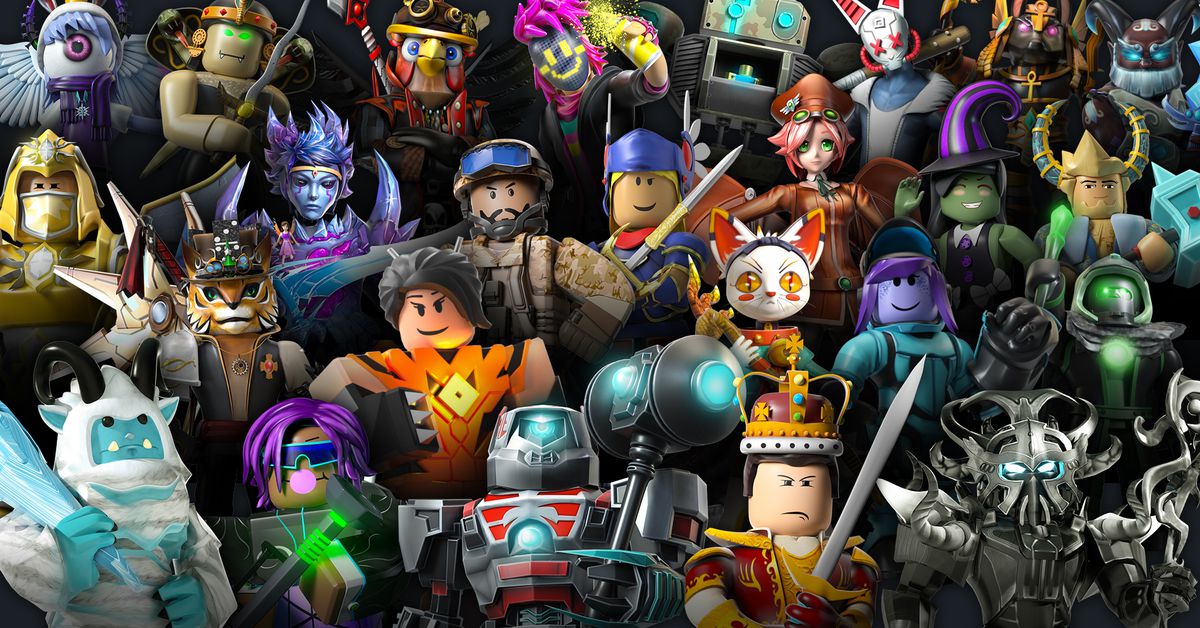
Roblox is a gaming and “metaverse” platform that primarily caters to children. Roblox Corp. refers to many of its games as “experiences” and they are created by the users, not the company. However, over the past several years, more and more big-name companies have begun using Roblox games to advertise their products. Hasbro released a Nerf Gun shooter; Mattel released an open-world Hot Wheels game; and more recently, Sega of America partnered with a company to release a Sonic the Hedgehog game on the platform. Truth in Advertising claims that Roblox is using advertising to trick millions of users. This happens because the company “has failed to set up any effective guardrails” to comply with Truth in Advertising laws on their platform .”
.
The report goes into great depth to describe and list various problems with advertising practices on Roblox, but a lot of what it comes down to is unmarked or undisclosed advertising in different forms. (Disclosed advertising, for instance, is when an influencer uses #ad on TikTok, which that platform requires users to include if the post is a paid promotion so that they abide by FTC guidelines.) Truth in Advertising states that it is difficult for children under the age of 10 to differentiate between “advergames”, which are games created by brands and products, and user-made games. The report lists an example of searching for Stranger Things, with the search results being unclear as to the difference between the paid Netflix game and fan-made ones.
According to Roblox’s community guidelines, advertisers who are placed in Roblox games must “remain responsible” for any advertising content and follow “Community Rules and the Terms of Use.”
Reached for comment about the complaint, Roblox Corp. issued the following statement to Polygon:
Roblox is committed to ensuring our users and developers have a positive and safe experience on our platform. We have strict guidelines for developers that want to promote or use ads within their experiences, including specific rules to protect users under 13, expectations that all developers adhere to Community Standards we strictly enforce, and no tolerance for fraud or scams. Our policies and processes are designed to combat content that exploits or tricks users. In order to compensate creators for their work, we make substantial investments in innovative ways. We ensure that ad experiences comply with all applicable laws.
Truth in Advertising’s 44-page complaint goes on to mention specific instances of misleading marketing practices that can occur in Roblox. There are players that interact with Roblox users and serve as ambassadors for brands on the platform. The complaint lists Nike influencers who spend time on Roblox and “buy” Nike gear and talk to people playing the Nike game, but aren’t “disclosed in the material connection to Nike” within Roblox.
In addition, Truth in Advertising’s report takes issue with “undisclosed” or unmarked Roblox avatars that engage in promotional activities, such as giving or selling in-game items. The report points out celebrity-inspired avatars such as LeBron James have been used for promotional exchanges.
” Advertisers must ensure the legal compliance of any endorsements. This includes the content, disclosure, and form used by influencers. Truth in Advertising stated that even in the metaverse companies have legal responsibility for making sure that all consumers know what they’re viewing and interacting with. “And despite the transitory nature of avatar influencers participating as walking, talking endorsements within the Roblox metaverse, no brand (including Roblox) is permitted to ignore its legal obligation to disclose these endorsements.”
HomeKit Weekly: Have an old iPad lying around? Add a $20 wall mount and turn it into a HomeKit controller
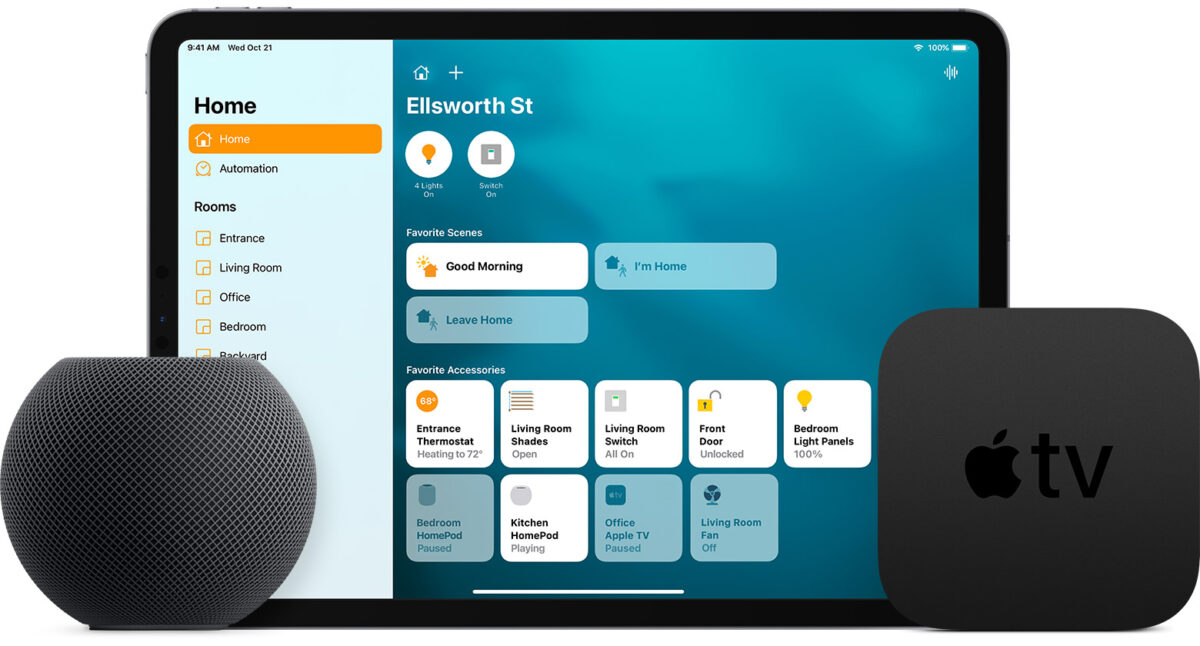
Making it easier to work to control my HomeKit accessories is something I am always thinking about. As easy as using the Home app on my iPhone is or turning items off and on with Siri, sometimes you want to make it even easier – especially for guests and non-smart home fans. You could certainly use the Brilliant panel, but what if you want something a bit easier to install? For example, have you considered an old iPad mounted on the wall? Read on to see how easier it is to configure so it can only work in the Home app.
HomeKit Weekly is a series focused on smart home accessories, automation tips and tricks, and everything to do with Apple’s smart home framework.
Any iPad that will run the latest version of iOS 15 will work great for this situation. So if you’ve got an iPad mini – it’ll be fine. It’s you’ve got a 10.2″ iPad – it’ll work great as well. Whatever iPad you have, it’ll be perfect. Since it’ll ideally stay plugged up to power the entire time, it doesn’t matter if the battery has seen better days.
One benefit of using an iPad in this situation is that it’ll function as a Home Hub, but you’ll need to configure it first using the instructions below.
Tap Settings > [your name] > iCloud and make sure that you’re signed in to iCloud with the Apple ID that you’re using in the Home app.
Scroll down and check that Home is flipped on.
Tap Settings > Home and turn on Use this iPad as a Home hub.
To use your iPad as a HomeKit home hub, it must remain in your home, powered on, and connected to your Wi-Fi.
What gear do you need?
Outside of an old iPad, you’ll need to buy a mount to attach the device to the wall. One of the best options for a wide range of compatibility is the elago Tablet Wall Mount. The iPad is held between two pieces of scratch-free silicone. The design allows you to quickly remove and reattach if you need to reboot, manually install an update to iPadOS, etc. It also includes a 7mm space between the wall and the iPad – making it easy for cable management.
How do you configure the iPad for a HomeKit wall mount?
As long as your iPad is logged in to an iCloud account that has access to your HomeKit setup, half the battle is already over. On the iPad, we’re going to want to use Apple’s Guided Access feature to lock the device to the Home app.
Go to Settings > Accessibility > Guided Access, then enable Guided Access. You can then set up a passcode to disable or use FaceID/Touch ID to end an active session.
Now that it’s enabled, it’s time to launch the Home app. Then, activate Guided Access using Accessibility shortcuts. Now, you’ve got an iPad that’s locked to the Home app. You can also prevent the iPad from sleeping – which is ideal as the iPad should be on permanent power.
What else can I do?
If you don’t want to lock the iPad to the Home app, you might consider HomeCam for HomeKit instead of the Home app. It’ll allow you to monitor your favorite HomeKit cameras like the Circle View camera, the outdoor eufy cameras, or the Circle View doorbell. It might be especially beneficial to put it near your bed to quickly check cameras if you hear something outside in the middle of the night.
Summary
Using an old iPad as a “HomeKit controller” is a great way to breathe life into a device that might not be powerful enough for daily iPadOS usage. Grab the elago Tablet Wall Mount, a long enough power cord to keep it charged, and you’ll have all you need to give easy access to HomeKit or other HomeKit accessories without needing to use Siri or find your iPhone that probably slipped between the couch cushions.
Samsung Galaxy Z Fold4 battery capacities revealed
A few days ago a Safety Korea certification revealed the two Samsung Galaxy Z Fold4 batteries, since the foldable design uses two separate cells. But the information was quite scarce – we only got to see the battery themselves with no relevant information attached to the images.
GalaxyClub was able to dig out the much-needed specs, though, and there are two ways to look at the findings. One would be disappointment that the overall battery capacity will remain largely unchanged. According to recent reports, the other is a thinner design with improved hardware. So in a way it’s good news that Samsung didn’t sacrifice battery capacity to achieve those.
The alleged Galaxy Z Fold4 batteries
One of the cells is rated at 2,002 mAh while the second one has a rated capacity of 2,268 mAh. The total rated capacity is 4,270 mAh, which matches the rated 4,270 mAh capacity of the current Galaxy Z Fold3. It’s important to note that rated and typical capacities are two different things and manufacturers advertise the typical and in the Z Fold3’s case is 4,400 mAh.
Either way, the new evidence suggests that there won’t be any battery downgrade as earlier reports suggested.
This wall-mounted analog clock displays the time of day in countries across the globe
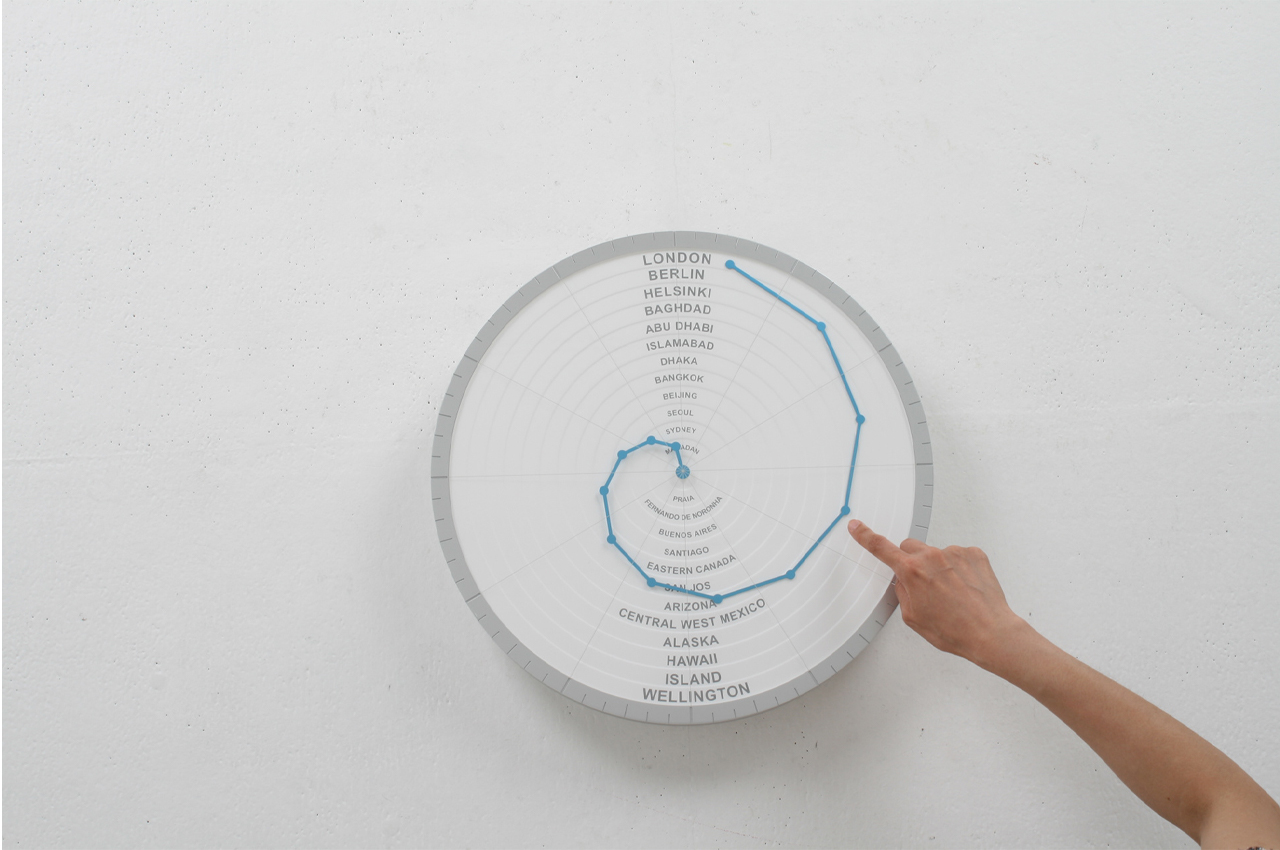
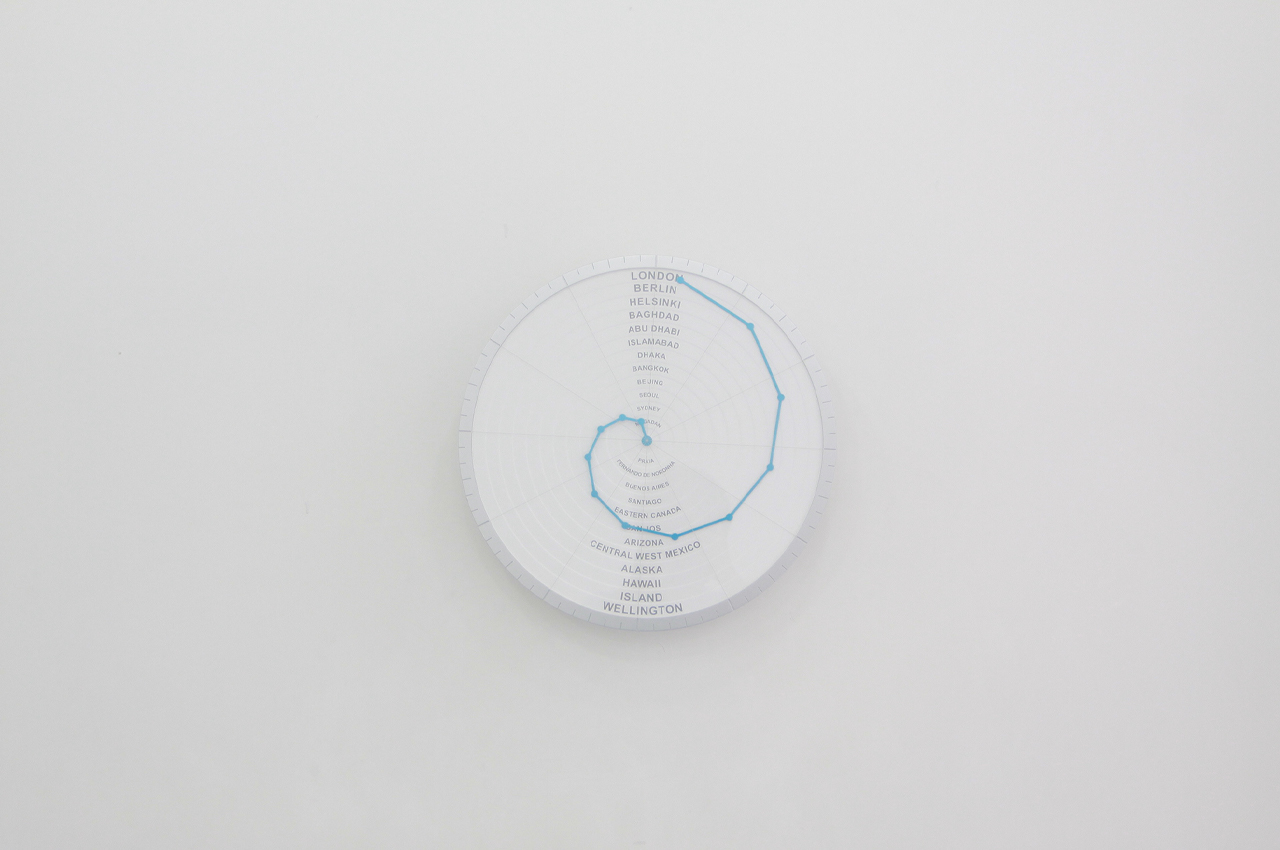
Bent Hands is an analog wall clock that denotes global cities and their corresponding time of day.
These days it’s as simple as looking through your texts to find the weather and time in other countries. In just a few seconds, you can check the weather conditions and times in places you have never been to or heard about. The convenience and accessibility of smartphones offers us instant information and access to global data, but the subtleties of an analog world can offer some advantages. Bent Hands, a brand new analog clock designed by UGLY.DUCKLING ID and featuring the times for major cities around the world, is now available.
Named after the crux of its design, Bent Hands features a single clock hand that starts in the clock’s center point and crimps in a concentric formation to coordinate the time of day with corresponding cities. Speaking on the design behind their clock design, Gihawoo explains, “It is possible to see the global time at a glance by differentiating the size of the circle. Because the watches’ hands are normally straight, the edge of their angled hand was created out of an attachment. It shows each country’s times. It implicates the message that the world is moving together without breaking even though they are living in a little bit different time frame.”
Positioned at the top of the wall clock, the spot that’s ordinarily reserved for 12:00, users will find the major city of London displayed. A ballpoint, which indicates the day, is located just beside each city name. It connects with a beam that trace the names of other cities and denotes the day in those cities. Then, the beam connects to another ballpoint that reveals the exact time for Abu Dhabi. Ballpoints are closer to the center of the clock. They correspond to more cities and reflect the current time.
I discovered Piepacker, a retro cloud gaming platform that was originally meant for the elderly through a WhatsApp conversation. A friend shared it with me and asked me to join. Although the name seemed a bit silly to me, my friend told me that it offered some old SNK games. It looked great!
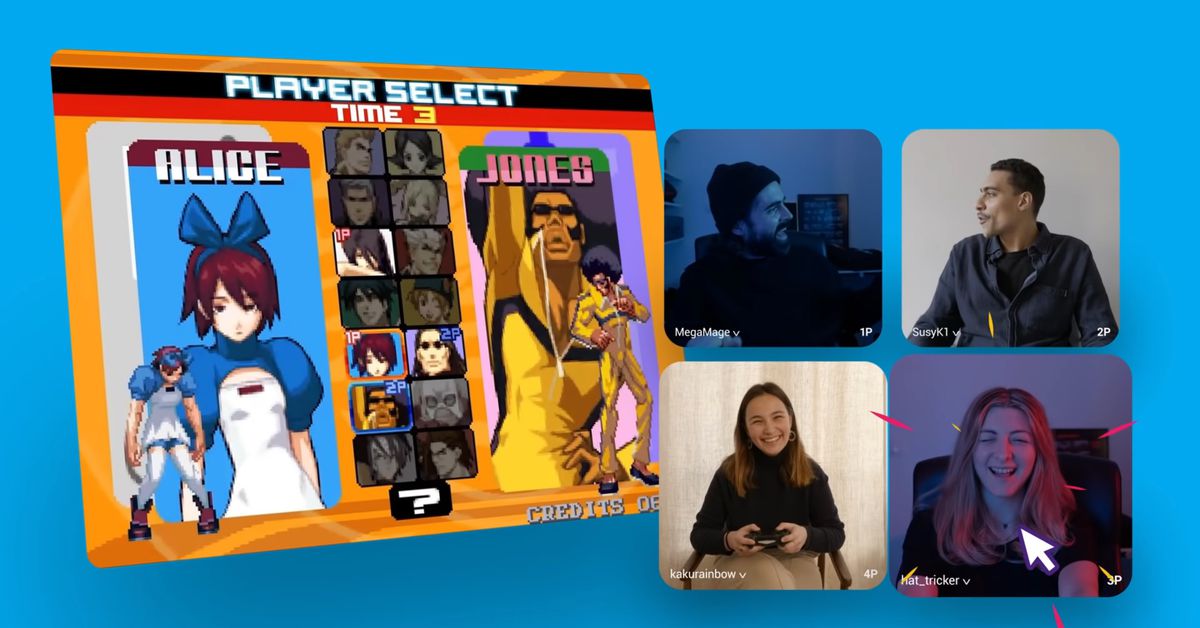
The pitch is simple. Classic games are available instantly from your browser with integrated video chat and multiplayer. It’s cloud gaming and a virtual hangout rolled into one, it’s free to play, and inviting a friend is as easy as pinging them a link.
There were a few aspects that I found immediately appealing about the concept. Cloud gaming services all share the same immediacy. The social aspect was also important. This resonated well with the games, which were largely multiplayer games from arcades and old home consoles. These games are simple, straight games, that can be shared with anyone nearby. Piepacker’s prominent video chat feature and simple game-switching puts the social experience above the actual games. It creates an online space for relaxed, chatty, informal gaming sessions with friends — and, almost as a byproduct of this, it gets a lot closer to the original multiplayer experience of some of these old games than even online-enabled reissues can. It’s a couch in the cloud.
The lineup of games isn’t stellar, to be honest; you won’t find anything from the heydays of Capcom, Sega, Konami, or Midway here. There are a handful of true gems, like Metal Slug X, Windjammers, and King of Fighters ’98, while a deal with veteran UK outfit Team 17 has brought a few vintage Britsoft social-gaming classics like Worms World Party and Sensible Soccer. Piepacker has also experimented with developing and publishing new indie titles for the platform, including the Bomberman-style Arsene Bomber.
But that’s not the point. The fun of Piepacker, once you’re in and chatting, is to poke around its archive and try some of the random esoterica you might find there, such as the extremely fun Neo Geo fighter Real Bout Fatal Fury, or the modern NES game Micro Mages, or the entertainingly dumb zombie brawler Night Slashers. Because you’re with friends, it can even be fun to play something as objectively terrible as the PlayStation kart racer SCARS for a few minutes. As a rule, on Piepacker, the more mindless the game, the more easily conversation will flow — so you don’t necessarily want to be too engaged anyway.
Piepacker has yet to really make a name for itself, although it has attracted support from the retro community with a successful Kickstarter campaign, as well as investment from the Lego Group, among others. It’s not necessarily the future, but whether it succeeds or not, there is something there: a different way to conceive of cloud gaming, contrasting with the high-tech approach of the likes of Google Stadia and Xbox Cloud Gaming.
“When I was a kid, I used to have the Game Boy, and I was dreaming about another device, which was the Game Gear by Sega,” co-founder and CEO Benjamin Devienne says over Zoom from Bordeaux in Southwestern France. Devienne is a handsome, enthusiastic entrepreneur type, and he’s about to invoke the legendary Nintendo engineer Gunpei Yokoi’s “lateral thinking with withered technology” approach to explain the thinking behind Piepacker.
” The contrast between the two handheld devices was quite interesting, says Devienne. Devienne says that the Game Gear had a better color screen and a better sound chip. It also offered better games. It was also more costly. Also you needed a lot of batteries to go through the day. On the other side, the Game Boy was much lower tech, like, black-and-white screen, pretty bad sound, and you could barely see what was happening on the screen. It was still cheaper and had a much stronger battery.
“In hindsight, [Nintendo] won this battle with accessibility and low tech. And when we started to look at the cloud gaming space, we were like, Hey, every service is awesome, like Google Stadia, PlayStation Now, but they’re designed for a world where you have fiber, where it’s 4K, 60 frames per second. This is a world where you have a lot of Game Gears, and we’re like, Hey, can we build the first Game Boy of the cloud gaming space — something that is much lower tech, but with a much lower footprint? “
The result is a cloud gaming service that uses 60 times less bandwidth than Google Stadia. This is good news for Piepacker as it lowers its costs and makes its free-to play business model feasible. It’s good news for the environment — cloud gaming services that require high bandwidth and lots of computing power at the server end can be very energy-intensive over long play sessions, as Eurogamer has reported. It’s also great news for those who don’t have the best internet access at home in countries like Southwest France (“We have good wine, cheese and internet!” Devienne jokes) and in developing markets such as Brazil, India and Southeast Asia where infrastructure is still improving.
Piepacker is lean because of its proprietary technology. This is where the company gets its curious and soon-to-be changed name. “Packing”, which is a method of compressing server processes to reduce bandwidth usage, is what Devienne and his cofounder used to test this technology. The processes they were using happened to be “pies”. Part of it is in its philosophy, where visual fidelity can take a back seat to the social interactions that are the real draw; competing with the home console experience is not the point. And part of it is the choice of retro games, which are of course technologically undemanding and much easier to optimize around.
Retro has been the place where Piepacker established its market niche. But for Devienne it was a way to get the service started. He’s not interested in creating a licensing-based retro streaming catalog like Antstream‘s (which has a much deeper game selection than Piepacker, but lacks its social features). There’s no intention to start charging a subscription or anything of the sort. Rather, Devienne is hoping to host more modern indie titles and turn Piepacker into a marketplace where developers can monetize their games how they like (with Piepacker taking a cut, of course). He suggests Team 17’s frantic co-op cooking game Overcooked as an example of a title that would work exceptionally well on Piepacker, and he’s right — but Stadia has shown players might be unwilling to pay to own games only in the cloud.
In the meantime, Piepacker is making decent money selling custom 3D filters for its video chat windows. (Devienne used to do analysis and research for Facebook and Twitch, and as such he’s unfazed that players are willing to spend up to $1,500 on animated virtual masks.) Further off in the future, there’s also a scheme for Twitch integration that will allow viewers to pay to jump into streamers’ games if they’re hosted on Piepacker, with streamers taking 70% of the revenue and Piepacker the rest.
“Something that really blew my mind when I was at Twitch was Twitch Plays Pokemon,” he says. I was amazed that no one is making games with this type of mechanic, where the viewers can be involved. We should make one!” That’s where Arsene Bomber started out, as a prototype that allowed viewers of a charity stream on Twitch to vote to control a UFO that could disrupt the Bomberman-style action. He imagines viewers paying to challenge their favorite streamer at Street Fighter, or to influence a single-player game with items, cheats, or extra enemies, in the same way they tip streamers now.
Human connection is the key to all of it. Before Piepacker had video chat, Devienne noticed in an early test that almost all players had Zoom or Hangouts open at the same time. When the feature was integrated, habits changed. “We realized that people started to consume games very differently than they consume games on other platforms. For instance, 70% of the time, they touch the gamepad, but 30% of the time, they don’t touch anything. They chat. To me, Piepacker resembles a lot the kind of experience you have when you invite friends, you’re around the table playing, like, a board game or D&D, and the game almost becomes an excuse [for] conversation. “It’s a way for people to get to know each other.” To test if the players would return to the service again, he separated groups and made sure they had access to only the best games. They did.
None of this is to say that Piepacker is bound to become a profitable, mass-market platform. But what it does is demonstrate, quite clearly, the potential of cloud gaming to differ from or expand the gaming experiences we know, rather than just provide a convenient way to access them. (Google Stadia had a more grandiose version of this idea, but with the closure of its first-party development studios, it seems we won’t get to see that future realized.) Devienne and his team are focusing on cloud gaming’s social benefits. This is something that larger cloud gamers would be wise to take note of.
iOS gains ground in recent years, Android still dominates the global market
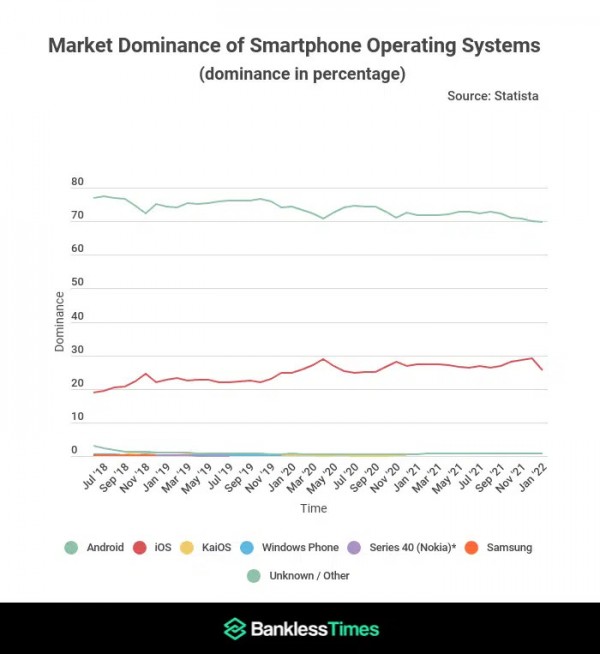
According to research done by StockApps, Apple’s iOS has been gaining ground for the last four years and has eaten a good chunk of Android’s global OS market share. Google’s OS is still the dominant OS.
In 2018, Android had a 77. 32% market share while this year, it is estimated that about 69. 74% of all devices in the world run Android. That’s almost an 8% drop in four years. In contrast, iOS has grown from 19. 4% to 25. 49% throughout the same period.
There could be many reasons behind this but the most obvious one is that Apple has expanded its smartphone and tablet lineup significantly. In the past few years, Apple has released four iPhone SE flagships instead of just two. It is evident that customers are happier when they have more options and pay less.
However, Apple is unlikely to be able to dethrone Android due to the open-source nature Android. Only Apple devices are sold with iOS while Android can be implemented on various devices, not just smartphones and tablets. Also, despite Apple’s efforts of expanding its portfolio of iOS devices, Android still has variety on its side, with smartphones ranging from $100 to $1,000+.
Then there’s Android’s domination in markets where iPhones are a lot more expensive than their rivals. South America and Africa are just two examples as the former market has just 10% iOS adoption. In contrast, in North America Apple is enjoying more than half of the market share.
Nintendo Switch Online adds Sonic Spinball in trio of new Sega Genesis games
Nintendo Switch Online subscribers who pay for the premium Expansion Pack tier got three additional Sega Genesis games as part of their subscription on Thursday: Sonic The Hedgehog Spinball, Shining Force 2, and Space Harrier 2. That fresh injection of 16-bit Sega software brings the number of Genesis games available through a Nintendo Switch Online + Expansion Pack subscription to 25.
Sonic The Hedgehog Spinball — colloquially known as Sonic Spinball — is an adventure in which Sonic flips, bounces, and launches through Dr. Robotnik’s pinball table-themed fortress as he collects the Chaos Emeralds and saves the people of planet Mobius from enslavement. Sonic The Hedgehog Spinball was developed by the American arm of Sega, at Sega Technical Institute, and was inspired by the popular casino-style levels of earlier Sonic the Hedgehog games.
Shining Force 2 is a fantasy-themed tactical RPG adventure, in which players, as the squire Bowie, lead the team known as Shining Force against a group of powerful demons known as … Gizmos. It’s better than it sounds. Released stateside in 1994, the events of Shining Force 2 are largely disconnected from the original Shining Force, which is also available on Nintendo Switch Online + Expansion Pack.
Finally, Space Harrier 2 is the Genesis sequel to Yu Suzuki’s classic arcade third-person shooter and was a launch title for Sega’s 16-bit console. It boasts some sick music from composer Tokuhiko Uwabo, who also composed Phantasy Star 2 and Columns for Sega, so check out that BGM Test menu if you have access to it.
Nintendo Switch Online + Expansion Pack costs $49. 99 annually for an individual user, and $79. 99 annually for a family plan (for up to eight users). The higher-priced tier of Nintendo Switch Online also grants access to Nintendo 64 games, the Happy Home Paradise add-on for Animal Crossing: New Horizons, DLC courses for Mario Kart 8 Deluxe, and as of Friday, Splatoon2‘s Octo Expansion.
Apple Cash replaces Discover with Visa for new virtual debit card accounts
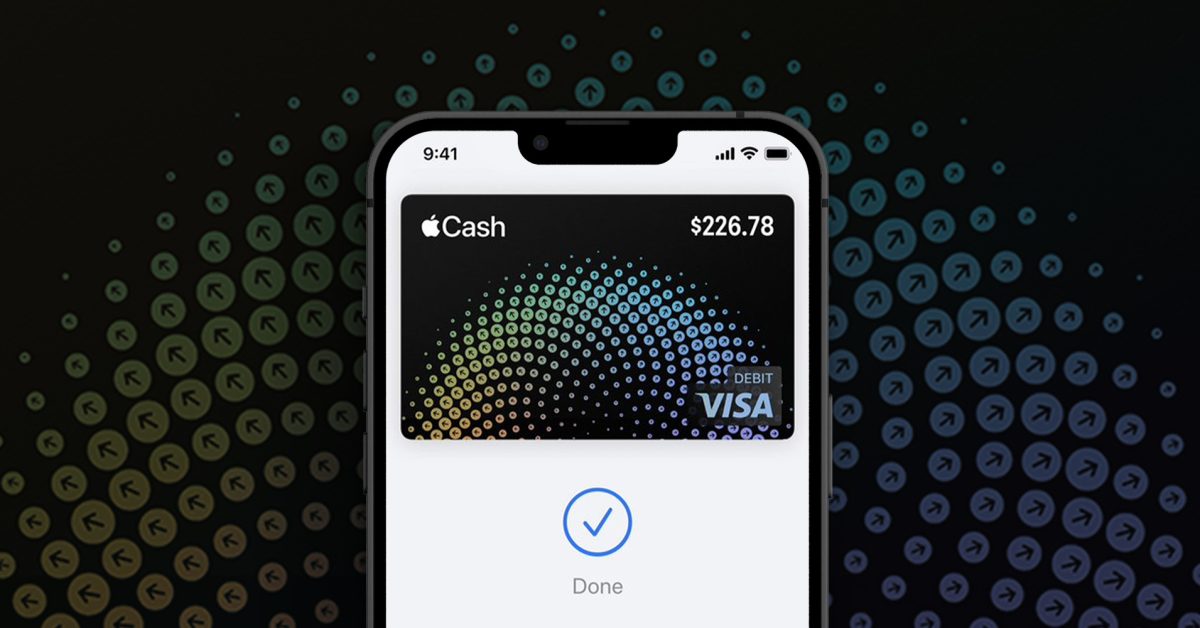
Apple cash allows you to send and receive money via iMessage. Stored in your Wallet, you can make secure and contactless payments with Apple Pay from your iPhone or Apple Watch. Apple Card users can also receive cash back every day. Previously a Discover card, your Apple Cash card is now Visa.
Spotted by user @Kanjo on Twitter, it’s easy to notice the card has a visible Visa logo in the bottom right corner. The card had no Discover logo before this update. Although not all will love the new logo, they’ll be able to remember that it is a Visa.
This change is likely to open up the option to use the Apple Cash card at more places. For instance, major US retailer Costco has an exclusive relationship with Visa. This is good news for Apple, as Visa is a well-known method of payment. Apple Pay will expand to many more countries so users can use Apple Cash in more places.
You can use the Apple Cash card where Apple Pay is accepted.
More on Apple Pay:
Apple Pay upgrading fraud prevention features based on device, location, and more
iOS 15. 5 beta 2 hints at Apple Pay support for Bancomat and Bancontact networks
Apple Pay surpasses Venmo and PayPal as teens’ favorite payment app, shows Piper Sandler survey
Murder mystery tabletop game company Hunt A Killer sees large layoffs
Murder mystery tabletop game company Hunt A Killer, which grabbed headlines and saw record-setting financial success during the pandemic, laid off a significant portion of its staff in late March, former employees told Polygon. Ryan Hogan, Hunt A Killer’s co-founder and chief executive, confirmed the layoffs in an emailed statement, but declined to share the exact number of workers let go. Multiple former employees told Polygon the dismissals accounted for at least 40% of the staff.
Hunt a Killer was estimated to have had 80 to 100 employees before the March layoffs. Some product teams have been almost completely wiped out, former workers said, with priorities now shifting between projects.
“We are currently shifting our efforts to the most growth-oriented aspects of our business,” Hogan told Polygon. “Part of that process is, unfortunately, a temporary reduction in force to allow focus on our thriving retail distribution and soon-to-launch live event business.”
He continued: “In the near future, we will be announcing new content partnerships and new retail partnerships as we continue to grow and evolve our business.”
Layoffs of this size aren’t new for Hunt A Killer; former employees told Polygon there have been at least three rounds of large-scale layoffs since 2020. Two workers told Polygon they received a few days’ worth of severance pay.
Hunt A Killer’s subscription-based murder mystery games took off during the pandemic. The games unravel over multiple boxes, which cost $30 per month, as players compile clues and put together the story. Boxes contain items like newspaper clippings, notes, little trinkets, and police reports, all curated to tell a story. In 2020, Hunt A Killer boasted $50 million in revenue — “nearly doubling” revenue from the previous year, the company said in a 2021 news release. Earning the No. 6 spot on Inc.’s 2020 top 5000 list, Hunt A Killer reported a revenue growth of 20,484.9% in three years.
Attempting to build on that success, Hunt A Killer pushed its staff to continuously release new material and games. Some workers told Polygon this led to extensive crunch for the company, often focused on the creative teams.
Though former workers said they enjoyed their work and teams, they said the pace at which it was conducted was often untenable. Some workers told Polygon that Hunt A Killer was not selling as many games as it expected in 2022, which led to the company’s massive layoffs.